food:beer

The Food & Beer Geeks.

Our first lunchtime web series!

Episode 1. “It’s gonna burn for a little bit…”

Brian Patton (top right) and Peter Zinter (left) embark on the first leg of a food and booze odyssey to Los Angeles where they visit street food and taqueria legends including Raul Ortega of Mariscos Jalisco food truck, Armando De La Torre of Guisados Taqueria and the friendly people at Los Guichos in South Central.

The Food & Beer Geeks is a web series that follows restaurateur Brian (a Dubliner living in Vienna for the past 17 years) and Michelin Star chef Peter as they gather inspiration, meet incredible cooks, and try some of the globe’s best food and drink.

This seven part series is lovingly presented by Broadsheet.ie and will appear at lunchtime daily for the next week before beginning a weekly schedule.

Reviews welcome below.

Warning: Contains beer, food, travel, laughs and a few dodgy oystNOMNOMNOM

Screen Shot 2015-07-30 at 12.51.56

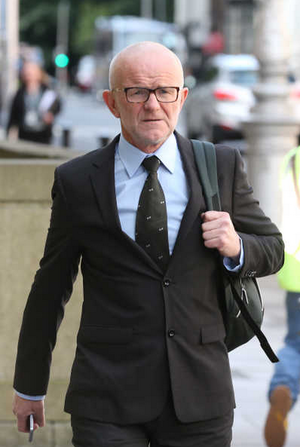
Former non-executive director at Anglo Irish Bank Fintan Drury arriving at the Banking Inquiry this morning

You’ may recall yesterday’s post containing the bulk of former CEO of Anglo Irish Bank David Drumm’s statement to the Banking Inquiry.

It came ahead of former non-executive director at Anglo Fintan Drury’s appearance at the inquiry this morning. Alan Dukes and Mike Aynsley are also scheduled to appear today before the inquiry takes a break for the summer.

In his statement, Mr Drumm claimed Mr Drury acted as an intermediary between Anglo Irish Bank and Brian Cowen.

Mr Drumm also claimed, “In April 2008 the Board of AIBC held a private dinner with Mr. Brian Cowen, TD, then the Minister for Finance and Taoiseach elect. I sat next to the Minister and it was the first opportunity I’d had to speak with him privately. We discussed the difficulties in the financial markets at that time” contradicting what Mr Cowen told the Banking Inquiry recently.

Mr Drury’s appearance was to begin at 9.30am this morning but it has been delayed.

Mr Drury, a college friend of former Taoiseach Brian Cowen and whose corporate communications consultancy company Drury Communications advised Anglo, was a non-executive director at Anglo Irish Bank from 2002 until 2008.

He founded Drury Communications in 1988 and retired from it in 1999.

Mr Drury was also on Anglo’s Risk and Compliance Committee

He was also an RTÉ reporter in the 1980s and presented Morning Ireland. He was chairman of the RTÉ Authority from mid-2005 until his resignation in January 2007.

Ciaran Hancock, of the Irish Times, spoke with Keelin Shanley this morning in light of the delay in this morning’s proceedings.

Ciaran Hancock: “When I was last with you [at 10am] they [the inquiry’s committee] were considering whether or not to publish the witness statement belong to David Drumm, they’ve had that meeting and they’ve decided to suspend publication pending further dialogue with the Director of Public Prosecutions so they’ve basically shelved the matter, if you like, for now. And then in relation to Fintan Drury, he was originally supposed to have appeared at half past nine, that didn’t happen, there were some delays, private meetings about the Drumm situation. He was then to appear at 11am and then we were told it was going to be 11.30am. He still hasn’t appeared. The committee is going to convene again, at around about midday and they’re going to consider, apparently Mr Drury has indicated that he wants to introduce new evidence to the inquiry today. So the inquiry’s legal team has had to consider this. They’ve been consulting with Mr Drumm, they’re going to be considering with the committee members now shortly. And it’s a question of whether this evidence can be introduced or not and whether it actually falls within the terms of reference of the inquiry.”

Keelin Shanley: “So new evidence from Mr Drury and a decision to abide by the DPP’s ruling on the evidence of Mr Drumm. In relation to Mr Drumm’s evidence is that the last, or statement rather than evidence, is that the last that we will hear of it at this point? Do you believe?”

Hancock: “No, I don’t think so. I mean they’ve been very careful about their language. They say they have suspended publication, so they haven’t definitely ruled out publishing David Drumm’s witness statement at some point. But they’ve suspended publication and they’re going to have, they’re going to seek further clarifications from the DPP in relation to this. Now, you know, people might wonder at this stage, given that there’s been so many leaks of the Drumm statement and if you look hard enough on the web you’ll actually find the whole thing. What the problem is in relation to this, but anyway the DPP has taken a very strong line, the DPP doesn’t want the witness statement published. Some banking inquiry members feel it shouldn’t be, or at least, some of it should be maybe some parts should be redacted but, they’ve decided to seek further clarification from the DPP as to whether or not they can publish at least some of it.”

Later

Hancock: “There’s also, apparently, there’s words that Fintan Drury is due to take a flight somewhere later on today so a question mark over exactly how much time he has or whether the committee will facilitate him to take that flight or will they want him to give that evidence regardless of whatever arrangements he’s made for later in the day.”

Listen back in full here

Bank inquiry to further suspend publication of Drumm statement (RTE)

Previously: David Drumm: My Version

Sasko Lazarov/Rollingnews.ie

Screen Shot 2015-07-30 at 13.36.42
Screen Shot 2015-07-30 at 13.32.38

From top: Fine Gael TD Eoghan Murphy and former non-executive director at Anglo Irish Bank Fintan Drury at the Banking Inquiry this morning

Former non-executive director at Anglo Irish Bank Fintan Drury is giving evidence at the banking inquiry.

He first took questions from Fine Gael TD Eoghan Murphy.

Eoghan Murphy: “Are you saying that when you were an non-executive director of Anglo Irish Bank, you never made a contact with the Minister for Finance or the Taoiseach on behalf of the bank?”

Fintan Drury: “Yes.”

Murphy: “Well I’m sorry, how can you explain then, the phone call you organised between Sean Fitzpatrick and…”

Drury: “Sorry, I beg your pardon, I thought that, I assumed given that I’ve given a clear account of that that you were asking, you know, beyond that..”

Murphy: “No I’m asking why in your written statement…”

Drury: “Sorry…I beg your pardon..”

Murphy: “In your written statement you said you believed you were not equipped to answer on the appropriateness of relationships between the Government and the banking sector. And when I asked you to elaborate on that, you said that you were here to account for your role as a non-executive director of Anglo and that that didn’t pertain to my line of inquiry and then I asked you if, as a non executive director, did you make contacts on behalf of the bank with the Government, to which then I think – in a long-winded answer – that you did not but in fact, you did.”

Drury: “Yeah but with respect, I mean, I absolutely accept that..”

Murphy: “I want to clarify that because..”

Drury: “No it’s…”

Talk over each other

Drury: “But I had, it wasn’t as if I wasn’t alluding to that or never made that clear. I made that clear in my opening statement this morning.”

Murphy: “It’s just that it wasn’t acknowledged in the written statement that you didn’t supply and I was wondering why and you’ve tried to explain that. Can I ask you then just to clarify. The contacts that you laid out to us, in your opening statement. Are they the only contacts that you made on behalf of the bank, with a member of Government?”

Drury: “As far as I can recall: yes absolutely.”

Murphy: “Do you recall a board meeting in early 2008 in which the possibility of the NTMA placing further deposits in the bank was discussed?”

Drury: “Well, em, if you wished, if you wish me to deal with that…”

Murphy: “I’m talking about an article from the Irish Independent which discussed, or which details a board meeting that was held in early 2008 at which the placing of deposits by the NTMA with the bank was discussed.”

Drury: “Well the position in respect of this…”

Chairman Ciaran Lynch: “Sorry Mr Drury, are you familiar with the article?”

Drury: “I’m not familiar with the article but I’m familiar with the source of the article so I’m happy to deal with the question if that..”

Talk over each other

Drury: “The article is based on information which, the source of that, for that article, everyone in this room knows what the source of that article is.”

Murphy: “I don’t know the source of that article. This is an article provided by the legal team this morning, chair. It’s from the Irish Independent. It’s entitled, The political contacts and controversies inaudible from May 2014, I think.”

Drury: “I never discussed, at any board meeting making contact with either an individual, i.e. Brian Cowen as Minister for Finance or the Department of Finance, in respect of any issues regarding Anglo Irish Bank. I never would have allowed any discussion arise at a board meeting of Anglo Irish Bank or Paddy Power where there could be potential for a conflict between my role as a board member and my relationship with Brian Cowen.”

Murphy: “Ok, thank you. We’ll move on to the Heritage dinner if we may.”

Drury: “Sure.”

Murphy: “Just to clarify some things around…you arranged the dinner, is that correct?”

Drury: “Well, I, as I explained in my, as I explained in my opening statement, deputy, I, it fell to me to see whether Brian Cowen would be prepared to attend what initially was going to be a lunch in the manner in which other public servants, public servants and senior politicians, political figures had over the ten years or so, as I’ve explained in my opening statement. And because I was known to be a friend of his [Brian Cowen] I approached him and asked him if he would do it. It was then the organisation of the dinner would have been managed by other people within the bank.”

Murphy: “Do you see a possible conflict of interest in using a friendship with the Taoiseach or the Minister for Finance to set up these types of contacts, to set up these dinners?”

Drury: “Well, you’re referring to these types of contacts.”

Murphy: “Sorry this dinner in particular.”

Drury: “Absolutely not.”

Murphy: “And you attended the dinner with Mr Cowen. How long did it last for can you remember?”

Drury: “I think about 90 minutes.”

Murphy: “And do you recall any formal presentations or documents.”

Drury: “There was none.”

Murphy: “None? Do you recall Mr Cowen arriving with a document.”

Drury: “I arrived with Mr Cowen. He did not arrive with any document.”

Murphy: “And he didn’t leave with any document?”

Drury: “And he didn’t leave with any document.”

Murphy: “OK.”

Drury: “Because I left with him.”

Murphy: “And can you recall from the dinner, any discussions surrounding problems with funding for Anglo?”

Drury: “Absolutely not. I mean I can recall other things, I would recall it if such a discussion had…”

Murphy: “No discussions around NTMA?”

Drury: “No but there was no general discussion around the NTMA, if you follow me.”

Murphy: “Moving on to the other occasion then, the Druids Glen outing.”

Drury: “Yeah.”

Murphy: “That was, was it lunch, golf and then dinner? Is that correct?”

Drury: “A meeting over coffee and then three of us went to play golf and then the five of us had dinner with, we were joined by Brian Cowen’s driver.”

Murphy: “And how long of a total engagement are we talking about in regards to the interaction between Mr Cowen and the representatives of Anglo Irish Bank?”

Drury: “Well, first of all, we weren’t representatives of Anglo Irish Bank. So let’s be clear that Gary McGann was chief executive of Smurfit Kappa, Sean Fitzpatrick was chief executive of Anglo Irish Bank, Fintan Drury was a former director of Anglo Irish Bank, not at that time, and Alan Gray was a director of the Central Bank. So, and they were, they were selected for that discussion on the basis that, prior to going on holidays, I had had a discussion with Brian Cowen about the value of having a number of smart people around a table to discuss with him some of the more substantive economic issues that, not just economic issues but primarily economic issues that were facing the country at the time and which he, as Taoiseach, might do to get some outside perspective. And Brian Cowen was pretty concerned that there would be any misunderstanding by anyone who would be approached and asked to be involved in such an exercise that he was in some way creating a kitchen cabinet. This was a kind of one-off discussion to explore areas that outside people might be able to give him guidance on.And the reason the people who were at that event were chosen because it was a combination of people I know and people who Brian knew. Brian had great belief in Alan Gray, as many people in politics and in the civil service do so he wanted him there. I knew Alan but not well. He wanted Gary McGann there because, as I referred to in my opening statement, he had a view that Gary was very smart, very committed to public service, he was I think at the time a former chairman, if not still chairman of the Dublin Airport Authority, had committed himself to a number of roles in public service but he was also chief executive of one of Ireland’s largest companies which had a global reach and Sean Fitzpatrick was my suggestion. And the suggestion was made at the time when Sean Fitzpatrick was deified. It’s an exaggeration but his reputation was both globally and in Ireland extremely high and he was seen as somebody who was extremely bright and extremely talented and would have therefore value to add. And it was done on that basis.”

Murphy: “At any point was Anglo Irish discussed?”

Drury: “No.”

Murphy: “At any point was liquidity or solvency issues in the bank discussed.”

Drury: “No, no, actually interestingly, the agenda which Alan prepared and brought with him, when we gathered had to my memory had no reference to the kind of issues which dominated subsequently, if you follow me like the ones your referenced.”

Murphy: “You were there to discuss the economy and what was happening globally.”

Drury: “Yes.”

Murphy: “And at no point, the banking problems that had already begun in 2007 came up? Northern Rock? Bear Stearns?”

Drury: “Yeah, I mean I’m not saying that, you know, there was no discussion about the fact that there was a, a very significant global, the start of, more than the start, the emerging economic difficulties which were partly being fuelled by significant financial difficulties. I’m not saying that that wasn’t the backdrop if you like. But what I’m saying to you is, to be clear, deputy, what I’m saying to you is, is that at no point was there any discussion whatsoever about Anglo Irish Bank and the question I posed in my opening statement was to say well, ‘why would there have been…'”

Watch live here

O'Donovan Rossa stamp

Etc.

Feargal Purcell writes:

An Post’s new 70c stamp marking the centenary of Pádraig Pearse’s historic speech at the graveside of O’Donovan Rossa was today unveiled in Rosscarbery, Co Cork by John Whelpley, great-grandson of Jerimiah O’Donovan Rossa.

Designed by Red&Grey Design, the stamp features a graveside photograph of Pádraig from the Keogh Collection at the National Library and may be viewed or purchased at our website [link below], at main post offices and the GPO Dublin. A limited edition First Day Cover envelope is also available….

Fight!

IrishStamps.ie

Screen-Shot-2013-02-15-at-10.43.25

With FIVE free pairs of passes to a Dublin Sightseeing open top bus tour of Dublin to give away, we asked.

What’s your favourite Dublin Bus route?

You answered in your tens.

But only five were allowed up top.

GlasnevinGuy:; “My favourite Dublin Bus journey has to be 140, top deck on a sunny day. Slip onto St. James’s Street after work, talk to some of the characters outside Tony’s and maybe get a bag of chips and sit on the step if you’ve time. Hop on the bus and, after rush hour, when I usually get out I feel like a king sweeping up James’s Street; look into Christ Church Cathedral sweeping past with people enjoying the sun on the grass or stooped under the arching trees in rain. Coming through the city centre always wakes me up before heading home; seeing what people are heading to watch in the cinema or meeting friends on O’Connell Street. Many’s a time I’ve made it home only to get the 140 back in, to meet a few friends and hop out a little closer to one of the small pubs tucked away off Dame Street. :)”

Fluffybiscuits: “My favourite bus journey? Probably the 76 as it held so many memories for college. I went to college in Tallaght. All my friends lived in Clondalkin at the time and during the summer we would get it up to Tallaght to connect with the 65, so we could get to Blessington. There was a bus driver called Brian I think it was. He was a small grey-haired old man who would always smile and, even in the pouring rain, always made sure there was room on the bus. And if there wasn’t, he’d explain why there wasn’t. Tallaght college holds a ton of happy memories for me. I failed my course but it was not about that as the people I met 15 years ago now remain my best friends in the world and I call them family. I remember bringing a girl I knew called Lisa on a date to The Square [Tallaght] and, being a broke student, I could only afford a cinema ticket and a Happy Meal, needless to say that one date was fairly awkward (I’m a backdoor bandit but was only coming to terms with it at the time, lol!) . The bus brought me to work in Dunnes Stores in [The Mill Shopping Centre] Clondalkin, a job which I loathed and a shopping centre I still loathe to this day! Sitting on top with the lads on the 76 shouting into my phone ‘Yer getting the boat to England, I’m not the father!!, it was one night!’…everyone would earwig and then I would shout “I don’t care even if you are my sister”. Thanks for the trip down memory lane, I’m all nostalgic now…”

Gooch: “My favourite was on a open-top tour bus about 7 years ago. I went on it with a few American friends. Driver was gas and a great singer. Best part was when we passed Heuston Station and he informed us that it was named after the American singer Whitney Heuston. His delivery was excellent and he didn’t let on he was joking, nor did I tell them he was. Still laugh when I think about it.”

Alan:: “My favourite was the 747 to pick up the guy I’m dating, when he came home from the States. Sadly he’ll be leaving the country again soon so what was an especially happy journey will also become a sad one…”

Song Boy Ste: “I used to take the old 46 bus home every Tuesday and Thursday after school, from Stillorgan to Shankill. These were the days when school finished at 4pm and not 3.20pm, how I’d love to work those hours now! And yet the day felt so long back than. The 46 was always a single decker bus, and always had the same regular drivers. Guaranteed a giggle to hear the shrieks of the BOI workers heading towards Cabinteely when a replacement driver would take the wrong turn away from Ballybrack towards Killiney, leaving them stranded somewhere in between. Many’s the day I’d stand with the driver to tell him which route the bus followed…we could have taken that bus anywhere! Nobody ever took the 46, it always felt like it was “our” bus, our very own chariot to carry us away from the humdrum of school and delivering us home earlier than the half past three No. 84 we would get on other days. Home just in time for Da’s burger and chips…cos he was working late that day :)”

Thanks all.

All winners will be notified by Dublin Bus today.

You may get about three emails at once.

Giggle.

Dublin Bus Sightseeing

Yesterday: Room For Five More

Previously: I’d Love To Do That

Dublin Bus Driver Hall of Fame

Screen Shot 2015-07-30 at 11.29.03

Cloverhill Prison in Dublin

The Herald reports:

Walli Ullah (21) was taken hostage by a group of prisoners who subjected him to a severe beating during which his arm was broken and his face slashed with a blade. Eleven prisoners were taken to hospital after a fight broke out when inmates at Cloverhill Prison refused to return to their cells.

Prison officers with riot shields and batons moved in and forcibly returned the inmates to their cells. Meanwhile, Anti-Racism Network Ireland (ARN) are calling for Ullah’s immediate release, and say that he arrived in Ireland seeking protection, having fled Afghanistan in fear of his life.

He claims to have travelled for at least three months, stowed away in a container, in order to reach our shores. On arrival, he was arrested by authorities due to the fact that he is a non-national and did not have the appropriate identification.

Stowaway discovered on side of M7 badly injured in Cloverhill riot (The Herald)

Related: Mystery man found on side of M7 with no English, passport or documentation (Herald)

Screen Shot 2015-07-30 at 10.13.31

Dr Rory Hearne, from Maynooth University, on RTE’s Six One last night

Yesterday, the Housing Agency released a report entitled the National Statement of Housing Supply and Demand 2014 and Outlook for 2015-2017.

It claimed that over 20,000 new homes per year, over the next three years, will need to be build in order to satisfy  demand.

In response to this Dr Rory Hearne, a lecturer in political and economic geography at Maynooth University, spoke to Sharon Ní Bheoláin to lay out his criticisms of the report and the Irish Government’s approaching to housing in general.

Sharon Ní Bheoláin: “60,000-odd new homes over the next three years. It doesn’t sound overly ambitious but you were saying our entire approach, the entire housing provision model needs to be completely overhauled?”

Rory Hearne: “Yeah, I think if you look at the report, it analyses that there’s going to be 20,000 houses required, additional houses required, from new household formations over the coming years. But  I think what’s missing in the report is a lack of ambition, a lack of appreciation of the wider housing crisis that’s there and it does identify it within the report. Issues like the mortgage crisis, the rental crisis. But, within it, it still focuses and a lot of debate focuses, on the private sector and we’ve seen the private sector developers, you know in the property industry sector coming out and looking for VAT reductions. And I think what it doesn’t analyse enough is the role in which that private model, that speculative, the home ownership, mortgage model failed, led to the cause  of the crisis and a lot of people simply won’t be able to get mortgages or afford their housing. And I think what’s in it, the supply, the 20,000 units, there’s not an explanation enough: what type of units are required in that, are they social housing? Are they rental? Are they home ownership? But there’s an assumption that there’s just private development we need. Rather then looking at, I think in particular, the government could address through additional local authority housing, a lot of this demand…”

Ní Bheoláin: “OK, so this over-reliance on mortgages and private development is contributing to the various crises we hear day after day in terms of affordability, in terms of the squeeze on the rental market, that the Government really needs to start looking at building it’s own units as well.”

Hearne: “Yes, it does. It has to look at alternative housing model. The housing system in Ireland is in crisis, it’s dysfunctional and if we look at, in particular, how the Government is responding to the crisis; the use of NAMA for example, is a good example of where they have just followed the same speculative model. We see NAMA now bringing in new vulture funds to buy up residential property. In fact NAMA has enough land and residential property to develop 25,000 units over the coming three or four years. I would argue that the Government should change NAMA’s remit to actually become a housing delivery agency, focusing on need rather than…”

Ní Bheoláin: “NAMA of course was set up to deliver the best return for the taxpayer and that’s why they’re selling off massive portfolios to these big international investors.”

Hearne: “Yeah and I would argue that is a completely short-termist perspective because, while the taxpayer is getting a certain amount in return, what’s happening is we’re bringing all this property investment into the Irish market which is fuelling rents, fuelling, and the other issue is NAMA is concentrating on building offices – we don’t need more offices, we need housing units.”

Ní Bheoláin: “We need housing units, and we need smaller housing units, according to today’s report.”

Hearne: “We do need smaller housing units and that also comes to another issue of vacant properties. There’s a huge issue  in particular of, and the housing need that’s identified in the report, it’s around Dublin, Cork, Galway, the big cities, there’s a huge issue of vacancy, derelict properties that need to be looked at but I think the bigger issues is our housing model in Ireland. What this report really lacks and analysis, a critical analysis and pointing to alternative solutions that are there, that could move away from…for example, if we look at Ireland. Ireland only has 9% social housing or local authority housing..”

Ní Bheoláin: “How does that compare with Europe?”

Hearne: “England, for example, has 17%, the Netherlands, 33% and this is why we’re seeing 1,000 children in emergency accommodation, we’re seeing 90,000 households on the housing list. Through the last ten years and, in particular, over austerity the budget for social housing has dropped dramatically.”

Ní Bheoláin: “And yet we had this massive housing strategy announced by the minister [for the Environment Alan Kelly] not so long ago. You seem to be very, very critical of our approach to this, the lack of creativity, innovation and joint-up thinking.”

Hearne: “Yeah I think what’s happened is the Government is over focused on the issue of the banks and developers and rather than actually looking at the housing system and what is the purpose of the housing system, it hasn’t put it together. And I would argue that in the hierarchy of the housing system, housing need, housing shelter, people’s requirement for affordable housing should be put first before the property development industry and before international finance and sorting out the banks and, in many ways, the banks have been prioritised over people. And I think as well, what has happened with the Government is that they haven’t really significantly increased invested in purchasing social housing. Within the housing strategy, three quarters of the new social housing is going to be through the new private rented sector. That’s not a sustainable model and I think that we need a radical change that would actually address housing need.”

Watch back in full here

21,000 new homes a year over the next three years needed to meet demand (RTE)

Broadsheet.ie