[Simon Crouch]
The largest study of its kind has found that children with parents in same sex relationships generally fare better than peers with parents in ‘traditional’ relationships.
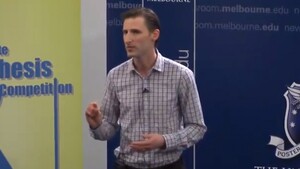
Newstalk Lunchtime’s John Keogh spoke to the lead researcher behind the study, Simon Crouch yesterday.
John Keogh: “…The study, undertaken by the University of Melbourne researchers among 315 same sex couples and 500 children found that children in same sex parent families had higher scores on measures of general behaviour, general health and family cohesion compared to population normative data. Simon Crouch is the lead researcher on that study simon he main findings what are the main findings of your research?”
Simon Crouch: “So, this study has been going on for three years and is based on research which has been conducted around the world often with much smaller sample sizes and that research has generally suggested that children of same sex attracted parents do pretty much the same as kids from other backgrounds and the previous research has indicated in some situates they do better so it wasn’t much of a surprise to find similar results in this work although it was a much larger study.”
Keogh: “Were there any benefits then for children who were of same sex couples?”
Crouch: “What we found was that children of same sex attracted parents tend to store a little bit better in two key areas, one was general health which is a measure of overall health, the other really interesting one was in family cohesion which is a measure of how families get along and how this impacts on child health, so there were two key areas where kids were doing better.”
Keogh: “What about this business of the parents in same sex couples don’t default to gender stereotypes, was that a big issue?”
Crouch: “Having found this result about how kids get along and also finding out that in some areas they were doing better we had to think why this would be and previous research had found that same sex couples and same sex families do distribute their roles within the work place at home slightly more equitably than heterosexual couples, instead of doing it along gender line with the mother staying theme and raising the kids and father going out and earning money they tend to do it based on skill sets, and what this does, it leads o greater harmony within the household and then in better health for the children.”
Keogh: “And in general health terms they seem to do better also.”
Crouch: “That’s another one where they seem to be doing better I think this is linked to the family cohesion measure and how these families are getting along but although compared to the general population they are doing well it was really interesting to find that within group itself there was an issue of stigma and two-thirds of families were experiencing stigma .”
Keogh: “Just tell us a little bit more about that what type of stigma reaction children were feeling.”
Crouch: “So there’s the obvious general stigma that children of same sex couple same sex parents receive, which might be bullying in the playground, but here in Australia we’ve got ongoing debates on marriage equality its not yet being legalised and often politicians stand up in parliament and make very negative comments about same-sex families, one M.P. recently compared same-sex couples and same-sex families to bestiality, and for children of same-sex families hearing these sort of comments about themselves an be really quite demoralising and have an impact on emotional and mental wellbeing.”
Keogh: “So really it’s not just political will but what the topic of conversation is on the day. If this issue wasn’t big in the news then supposedly the stigma wouldn’t be as big?”
Crouch: “It would be slightly less but there are even more subtle variations of stigma which occur in society, for example schools ending letters home to parent addressed to to Mr and Mrs. It might seem quite a minor thing but it will put parents on the wrong foot at the beginning of the day and bring a little distress and tension into the household so it can be very subtle things as well as those obvious and direct things.”
Keogh: “I suppose you could also say that children of same-sex couples, as this becomes more and more common as we’ve seen not just in this country but elsewhere, as that becomes more the norm the stigma tends to fade away.”
Crouch: “It does to a large part to many aspects and in many areas but there are always aspects to society, I mean people in society who will struggle to accept same-sex families, and they tend to be given quite a loud voice though they are a small minority and I think this will persist for some time yet.”
Keogh: “We are in this country, Simon, going to have a referendum on marriage equality before this time next year the issue of parenting has already emerged as a key issue and no doubt will form part of a major debate in the run-in to this referendum. would you think that the findings of your study will help to form part of the debate in this country?”
Crouch: “I think they’re gong to be useful for a part of the debate there are differing opinion as to whether or not marriage is necessary to have children or whether children play an important mar in marriage but its definitely an argument used, particularly by those people who are against marriage equality who say marriage is for raising children, you need a biological mother and a biological father do do that so you shouldn’t allow same-sex marriage, so I think you can go and use these results to counter that argument somewhat and say actually same sex couples are raising children and doing a really good job of it, so that can’t be used as a reason to preclude marriage equality.”
Listen here (starts at 10.54)