

Category Archives: Misc

90299569Michael-Taft

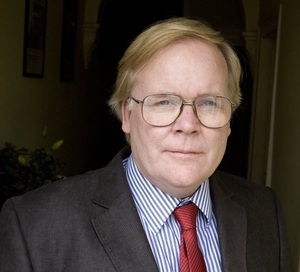
From top: Joan Burton and Enda Kenny at a JobBridge announcement in 2013: Michael Taft

JobBridge, the poorly-conceived, figure-massaging internship scheme, is finished.

But what – if anything – should replace it.

Michael Taft writes:

The Sunday Business Post’s investigation into JobBridge was devastating.

JobBridge has been used to staff the HSE, Hewlett-Packard, public enterprises, supermarkets and universities.

A large number of interns report frustrations, especially as they have almost no workplace rights, while the investigation showed a scheme that grew out of control lacking robust monitoring and compliance mechanisms.

It’s time JobBridge was closed down.

The youth section of Unite the Union has long campaigned for its abolition; Impact has recently called for the programme to go. It’s already being reduced.

The programme will be cut from €70 million last year to €51 million this year. Cut the rest of it. And let’s use the money to create a real programme of work, targeted at people who are having a hard time in the market.

Long-term unemployment can be a dismal experience. The longer you are out of work, the more difficult it can be to get back in: your current skills may be become degraded, previous work routines are undermine, there can be mental health issues, you get stuck so far into a rut that it is difficult to pull yourself out.

Training programmes work best when the person is motivated and there is a belief that a job is possible at the other end. Long-term unemployment is the ultimate de-motivating experience, leaving people with little hope.

In 2015, long-term unemployment (without a job for more than a year) averaged 114,000. That amounts to 5.3 percent of the labour force. By contrast, long-term unemployment in the EU-15 makes up 4.7 percent.

When we turn to what can be called ‘chronic’ long-term unemployment – two years and longer – we find, on average, 83,000 stuck in this situation and, of this, 50,000 have been unemployed for four years or longer.

So let’s redirect the resources – approximately €85 million – from the JobBridge and Gateway programme) into a guaranteed real job programme.

In other words, the state should become an employer of last resort; when people cannot find work in the labour market, the state will provide that work.

What would such a programme look like?

An Employer of Last Resort

The Gateway programme is a local authority labour activation scheme that provides short-term and part-time work and training opportunities for people unemployed longer than two years.

Participants work for the local authority for 19 ½ hours a week and the placement lasts 22 months.The minimum weekly payment for participants is €208: Jobseekers’ payment plus a €20 top-up.

Participants can take up other part-time employment provided it does not interfere with their Gateway work placement.

There are two major problems with Gateway. First is the coercive element: those who refuse a placement without good cause may have their social protection payment reduced or even removed altogether.

Secondly, job displacement: there is a real danger that long-term unemployed are doing work that should be done by full-time local authority workers.

Let’s transform this programme (its advantage is that it doesn’t interfere in the business market):

* Turn the placement into full-time employment on the National Minimum Wage with contracts for two years (there could be some provision for part-time work where appropriate).

* Extend the programme to all non-profit and civil society groups in addition to local authorities.

* Remove the coercive element and make the programme voluntary.

* Target, in the first instance, people out of work for two years or longer with particular (though not exclusive) emphasis on young people, those over 50 years and high unemployment areas.

* Integrate work with training/education. This is important as many of those on long-term unemployment may have skills deficit which would limit their transition from the scheme into other work.

To the extent that local authorities expand their job opportunities, this should only be undertaken where there is a prospect of transition to a full-time local authority job, overseen by employers and trade unions.

What Kind of Work?

There will be criticism that such programmes are largely ‘make-work’. However, when looking at the employment currently offered by local authorities through Gateway, we can see that there is real work going on:

GIS mapping * HR – to assist in running with Gateway projects * CMAS communications * digitising records, town and country files * ergonomic assessments * sustainable energy projects * Using CRM for health and safety tracking * LCDC administration * marketing and promotional work for local enterprise (buy / source local campaigns) * records management and data entry * social media (website, Facebook, Twitter) * library supports * Basic horticultural work i.e. planting, weeding in parks, walking trails, derelict sites * Amenity improvement schemes – bench-making, carpentry * Biomass Scheme – plant, maintain and harvest areas of willow biomass * graveyard maintenance * Sports development (e.g. walking, basketball and soccer clubs) * local museum supports (research, reception, security, exhibit guide) * historical sites * arts programmes for key groups (e.g. arts and disability) * tourism supports

This is some of the work that is already being undertaken –providing a broad range of opportunities up and down the skill ladder.

Community Participation

Under the current Gateway programme only local authorities can provide placements. This should be extended to non-profit groups, civil society organisations and community groups – allowing them to devise programmes that would employ people.

The range of such groups could be considerable:

Geographical-based community groups * single-issue groups (unemployed, arts, drug rehab groups, disability support groups) * local Chambers of Commerce and Trade Union Councils branches * environmental groups * Development and Area Partnerships * retirement and elderly groups * Youth Clubs * parish councils and church groups * rural support organisations * citizen information centres * literacy groups

The criteria for participation should be that civil society groups are non-profit, do not compete with commercial enterprises and create programmes with projected outcomes that are measureable.

One can imagine these groups coming together – under the organisation of the local authority – in small town, city suburb, rural area, villages to create programmes that would add to the community wealth and the local economy.

This is about community regeneration and repair, participation and democracy.

Funding the Programme

I estimate that the combined JobBridge / Gateway budgets could employ nearly 7,000 on a full-time basis (with a €3,700 payment for resources, materials and training). This is based on the wage minus the Jobseekers’ Allowance paid.

However, this doesn’t count the tax and PRSI gain the government would gain –which, on average, would be approximately €2,400 including employers’ PRSI. Nor does it count extra consumption tax revenue from greater purchasing power recipients would receive.

We could take a more radical approach and examine the prospect of amalgamating a number of schemes besides JobBridge and Gateway: Tus, Community Employment Programme and the Rural Social Scheme.

There is a total of €627 million spent on all these schemes combined. Are we getting the best impact out of this – in terms of employment and social value?

We should be aware that some of these schemes cater for more than just long-term unemployed.

The Rural Social Scheme, for instance is targeted at under-employed and low-income people working in agriculture and fishing.

Nonetheless, an amalgamated programme catering for full-time and part-time work, aimed at different social constituencies could be considered.

This employer of last resort programme will not create a full employment economy. That can only come about when all the levers available to the Government – labour market, fiscal, investment, enterprise policy – are pulling in the right direction.

This is only a modest start – but one that can be expanded if it is seen to work.

This is a programme to get people back into work, back into the social networks that will help them to explore new life-chance and job opportunities for themselves. It is about giving hope.

And the great thing is that this is wholly feasible and can be paid out of current resources. One thing’s for sure – it would be a great investment.

Michael Taft is Research Officer with Unite the Union. His column appears here every Tuesday. He is author of the political economy blog, Unite’s Notes on the Front. Follow Michael on Twitter: @notesonthefront

Rollingnews

Yesterday: HSE Decided At A National Level To Use JobBridge

Sam-Maguire

Hic.

Trademark lawyer Brian Conroy writes:

Well here’s one way the folk of Mayo might get their hands on Sam Maguire this year…..SHOTS! Some enterprising young man (Jeffrey Spillane, hello to you) has applied to register “Sam Maguire” as a Trade Mark for Whiskey…

Sam Maguire Whiskey (Brian Conroy)

Cg9y_z7WMAAW10p

The families clap as the jury leave the Hillsborough inquests in Warrington. One woman shouts: “God bless the jury.”

There are lots of tears as lawyers are hugging the families and the shadow home secretary Andy Burnham is hugging the families in court.

There are lawyers crying…. People are saying they can’t take in the enormity of it all.

A spontaneous chorus of “You’ll Never Walk Alone” is being sung outside the courtroom as people raise Liverpool flags above their heads.

Hillsborough inquests: Fans unlawfully killed, jury concludes (BBC)

PA

Screen Shot 2016-04-26 at 10.44.40

Social Democrats TD Stephen Donnelly

Social Democrats TD Stephen Donnelly spoke to Rachael English on RTÉ One’s Morning Ireland this morning about the matter of Irish Water amid the Government formation talks.

Mr Donnelly said the future of Irish Water should not be solely discussed by Fine Gael and Fianna Fáil negotiators behind closed doors but that it should be discussed among all elected TDs in the Dáil.

At the end of the interview, Mr Donnelly explained that he hasn’t paid his water charges, saying:

“Anyone who’s paying out €160 is essentially being asked to go out into their front garden and set fire to the money”.

Grab a tay.

Rachael English: “It’s 60 days without a Government and the talks are stuck over water charges. The Social Democrats have said that the water issue must be discussed in the Dáil and not confined to a closed room among Fine Gael and Fianna Fáil negotiators. One of its three TDs, Stephen Donnelly, joins us now, good morning.”

Stephen Donnelly: “Good morning.”

English: “You would have had a say had you remained in the process of talking to find a Government.”

Donnelly: “Well we do have a say, we’re a political party elected to the Dáil and that’s where this should be debated. The Greens entered talks in good faith and had to leave, a lot of Independents entered talks in good faith and had to leave, the Social Democrats met both Fine Gael and Fianna Fáil at the start, we had very constructive talks with both parties. And then we said the numbers are such that you two need to go and come to some sort of agreement and that we would then engage. And we were right: those who did engage before that spent a lot of time in there in good faith and they had to leave. We have now reached out to Fianna Fáil, to Fine Gael, to Sinn Féin, to the Greens, in the last week, because the talks are back on and therefore we are very much in the process – we’re not going to go and prop up a Fine Gael minority government, we said during the campaign we wouldn’t do that…”

English: “But you’ve left Fianna Fáil and Fine Gael to it, in terms of making the arrangements for whatever Government needs to be formulated so they have to do an agreement on Irish Water.”

Donnelly: “No they don’t, the Dáil has to have an agreement on Irish Water so, people are really fed up. We’re on day 60…”

English: “But the Dáil did agree on Irish Water, I mean the thing was discussed, it was debated, it was voted on, it was established…”

Donnelly: “It was and then it was a general election and then the majority of TDS elected ran partly on the basis of changing that decision. Let’s not forget: Irish Water was only one of, I think, only two times in the last Dáil term of five years where the Opposition walked out. If you remember Phil Hogan, the minister, then rammed it through, the whole thing through in three hours. And it has been a disaster right from its beginning and continues to be a disaster. And we now have, what it really is, a totally unacceptable situation where we have Fianna Fáil and Fine Gael locked away in a room, potentially about to collapse the 32nd Dáil on the issue of water. What the Social Democrats are saying is, ‘Look, water was one of the key issues of the election. Obviously there are arguably more pressing issues, like homelessness, like people having to wait 25 times longer on public waiting lists than private waiting lists…'”

English: “Murder on the streets…”

Donnelly: “Like murder, right, like the guards are being 20% under resourced and so forth. There are very, very serious issues. We have one in eight children in the country now in daily poverty. The Dáil needs to get about doing its business.”

English: “So is it ridiculous that the 32nd Dáil is being threatened with collapse over an issue which, you can break it down, to €3 a week per household?”

Donnelly: “Well we think it’s outrageous that it is potentially going to be collapsed and so what we are saying to Fianna Fáil and Fine Gael is: there is clearly an impasse. Both parties ran on quite different positions. We actually don’t believe that either position is a tenable position, either Fianna Fáil or Fine Gael’s position but that’s fine. That’s up to them to decide. We’re saying look: clearly this has reached an impasse. The rest of us want to get on with the job we’ve been elected and paid to do – as I’m sure more Fianna Fáil and Fine Gael TDs. Take the issue of Irish Water out of the talks, bring it back to where it belongs – which is in the Dáil – like let’s not forget, about 90 TDs were elected with a very clear mandate: To end domestic water charges. There are about 90 TDs who would vote accordingly. So let’s not collapse the 32nd Dáil on the issue of water, let’s bring it back..”

English: “So how do you change it? Would you change the system of having a national utility called Irish Water, managing the Irish Water project, and having water charges? What would you change?”

Donnelly: “Yes, there’s three things we would do. First of all, we would call for a referendum on public ownership, probably to change Article 10 of the constitution. There is a very real fear of privatisation – probably not in the next few years but in the future. So we would look for a referendum to make sure that could never happen. We would reconstitute Irish Water, you could say end Irish Water, abolish Irish Water but not do what Fianna Fáil is looking to do which, quite frankly, is bonkers – which is send it back to the local authorities – but have a national water board. Because whilst the Government made and unholy mess of Irish Water in the last Dáil, actually the engineers are doing a very good job like they are doing the business that needs to be done on the water system which is great. And the third thing we would do is we would end domestic charges and, partly, and it’s a message people really need to understand, partly because the money that is being raised from domestic charges does nothing other than cover the cost of raising the money. So none of the money that anyone is paying out or not paying out is being used to maintain the system or upgrade the system…”

English: “So all the money to fund water and the repairing of the system should come from the Exchequer, is that what you’re saying?”

Donnelly: “Should continue to come from the Exchequer. Let’s not forget, it costs twice as much in Ireland to provide water as it does in the UK, including northern Ireland where the population density is more or less the same. So what should be done is the engineers should be allowed get on with the job of identifying the leaks, of upgrading the system, that creates very, very significant cost savings. You reinvest those cost savings into upgrading the system. So both from an engineering perspective, from an economic perspective and from a political and democratic perspective, there is a very clear argument that says: end domestic charges, use the savings which are being generated to reinvest and upgrading the system which obviously has to be done…”

Listen back in full here

Sasko Lazarov/Rollingnews

star-wars-daisy-ridley

Daisy Ridley as Rey in Star Wars: The Force Awakens

‘sup?

Jamie Hickey, of Blabba the Hut (Ireland’s only “dedicated Star Wars Blog/Podcast),  writes:

Yesterday we started a campaign to help Alice Baker, a budding film director and producer living with Cerebral Palsy, to deliver a message to her hero Daisy Ridley.

Our campaign #ReyofHope: an Open Letter to Daisy Ridley went somewhat viral in the Star Wars universe yesterday, and was even supported and shared by Star Wars Actors like Mark Hamill (his tweet here), Julie Dolan, Princess Leia in Star Wars Rebels (her tweet here), and Ana-Maria Leonte (Dasha Promenti in Star Wars: The Force Awakens).

But we have not achieved Alice’s goal yet, we need to get the message as loud and as far as possible, and ultimately to Daisy Ridley. Mark Hamill is filming with Daisy Ridley right now (and soon will be in Ireland) and we are confident, with your readers help, that Alices’s message will reach its destination…

#ReyofHope: an Open Letter to Daisy Ridley (Blabba The Hut)

#makehistory 3

Three’s new TV campaign

Diarmaid Walsh writes

The campaign evokes hope and positivity, acknowledging the commitment of the supporters and also the team’s quest for success. Underpinned by Irish band, The Stunning’s classic 90s anthem “Brewing Up a Storm”, the campaign is a rallying call to all supporters to get behind the Irish team, reminding them why they love football…

Featuring: Big Jack and legions of women fans (happy face).

cafe-society

What you may need to know:

1. Jesse Eisenberg plays the Woody-by-proxy role for the second time in the director’s 48th movie.

2. Late-period Allen is like a family-sized box of Roses on Stephen’s Day; it’s still chocolate, but the purple ones are long gone.

3.
Steve Carell took over from Bruce Willis, who dropped out due to “scheduling issues”.

4. Not the first name that would spring to mind.

5. There’s still no sign of Allen’s TV show for Amazon. It doesn’t sound good, though.

6.
Broadsheet prognosis: If you can’t be good, be funny.

Release Date:
August 12.