
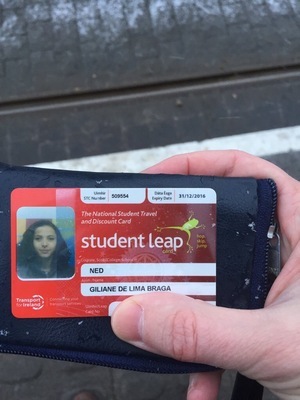
Robin writes:
Anyone know this lady? Found his morning at Kilmacud Luas stop.
Anyone?



Ratoath, County Meath this morning.
Thanks James Carr

Stiofán says:
The 1st snow of the Spring today “If spring comes can #winter be far behind?”
Thanks Stiofán

Bonkers writes:
Snow in Finglas [Dublin], cold & wet arses for motorbikers

Blanchardstown [Dublin] this morning.
Thanks Dee

Lucan, County Dublin, this morning.
Thanks John


John Davis writes
a before and after

Templeogue, Dublin 6w
Thanks Alan Ball

Jeannie Frampton writes:
Naas, County Kildare 9.15am

Blanchardstown, Dublin
Thanks Helen
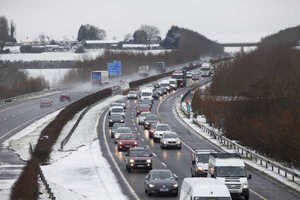
M7 between Newbridge and Naas [Co Kildare] this morning.
Eamonn Farrell/Rollingnews
Snow in your area to Broadsheet@Broadsheet.ie marked “snow”




MORE to folly

Britain’s National Crime Agency in action
The National Crime Agency (NCA) – described as Britain’s equivalent to the FBI – has contacted the BBC after revelations in a Spotlight programme about the sale of Nama’s Northern Ireland property loans.
[The National Asset Management Agency (Nama) sold the loan portfolio for more than £1bn in April 2014]
Spotlight covertly recorded former Nama advisor Frank Cushnahan claiming he was to receive fixer fees after the deal.
NCA director general Lynne Owens told the Policing Board that a NCA deputy director has approached the BBC.
“He has been engaging with the BBC in light of the Spotlight programme and of course will follow any lines of inquiry that arise as a result of that programme,” Ms Owens said.
Nama loans sale: NCA contacts BBC over Spotlight revelations (BBC)
Previously: Spotlight Falls On Noonan

This afternoon.
Leinster House, Dublin.
Newly forgiven Green Party leader Eamon Ryan, just elected in Dublin South, and Green Party deputy leader Catherine Martin, a new TD for the Dublin Rathdown constituency.
Bloody hippies.
Earlier: Dan Boyle: The Germans Have A Word For It
Sam Boal/Rollingnews

A still from Equate’s ‘Open The Gates’ video campaign
Politicians, eh?
They can agree on nothing.
Until NOW!
“I support the three actions [reform school admissions, where religion is taught in the school day and more multi and non-denominational schools]. My own children attend the Dublin 7 Educate Together, and I think having more such schools would better serve communities throughout the country that have families from diverse, multi-ethnic or non-denominational backgrounds.”
Paschal Donohue TD, Minister for Transport, Fine Gael
“Fianna Fáil commits to reform school admissions on the basis of locality to ensure children have access to their local school regardless of denomination while protecting religious rights. Ensure no child is excluded from school life while respecting the religious ethos of each school. Engage with educational partners to set out a consensual approach to roll out further divestment of schools in line with assessed community demand”.
Barry Cowen TD, Fianna Fáil
“Fine Gael is fully supportive of moves towards a more pluralist system of patronage for our schools to provide greater parental choice and diversity in our school network.”
Leo Varadkar TD, Minister for Health, Fine Gael
“It is Sinn Féin’s policy to end the laws that allow for religious discrimination against children in school admissions and we will support increased diversification of patronage. We are committed to increasing the education capital programme which will allow for more school builds and this will allow for diversification also of the types of schools being built.”
Gerry Adams TD, Sinn Féin President
“We’ll ensure that publicly funded schools prioritise children from the local community, rather than focusing on their religion.”
Joan Burton TD, Labour party leader
“The Social Democrats have included a commitment to end this discrimination in our manifesto. Whether or not in Government, I will be pursuing this vigorously.”
Roisin Shorthall TD, Social Democrats
“I believe that the church and state need to be separated and have campaigned for this for years both inside and outside the Dáil. Access to and participation in schools should have nothing to do with religion It is essential at this day and age that people do not feel under pressure to christen their children just to secure a school place, and we are therefore committed to keep on fighting for equal access to schools for all”
Ruth Coppinger TD, AAA-PBP
“I recently met with Equate and fully endorse their campaign for reform of our education system and to ensure greater equality in children’s education in Ireland. I hope to help the campaign further and I agree with your points that reform is needed in schools’ admissions policies so that they no longer discriminate due to religion; that the school day change so no school child is excluded from fully participating due to their religion or non-religion, and that we need to increase the number of multi and non-denominational schools available.”
Thomas Pringle TD Independent
Messages to children’s rights organisation EQUATE expressing cross-party commitment to equality in education.
There you go now.
Previously: Open The Gates
Thanks Fidelma Guinan
Time to train the Army to drive the Trams, this is blackmail https://t.co/umWBvkb8ZC
— noelwhelan (@noelwhelan) March 2, 2016
#YESEquality stalwart undermining democratic right to strike. Welcome to Ireland. https://t.co/p0o7bsROKY
— Glenn Fitzpatrick (@glennthefitz) March 2, 2016
Gulp.
Glenn Fitzpatrick writes:
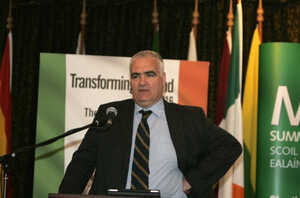
I have been struck by just how hard a time the Luas drivers have been getting. This culminated yesterday in a Twitter spat between myself and [political analyst and Irish Times columnist] Noel Whelan (above)who essentially called for the army to be drafted in to drive the trams in place of striking workers.
He claims to be on the side of the users but when I asked him if he would accept that Transdev were taking advantage of our shoddy laws and were irresponsibly playing out a game in public he essentially labelled me juvenile and disengaged. Welcome to Ireland, the place where the only criteria for being seen as a champion of equality is a YES Equality badge.
Fight!!
WRC Invites Both Sides In Luas Dispute To Talk
Previously: Trams Like Us
UPDATE: Strike off
Sure where, etc.
Ger writes:
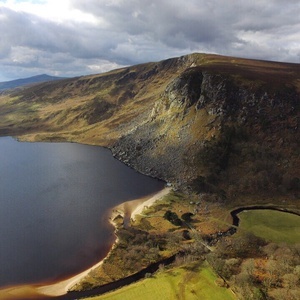
Hi, I recently set up a website Eirescape.com where I plan to find the best hidden gems in Ireland. Is there any chance you could share it with your readers to see if they have any tips. It’s only recently set up and is not done so to make money but to share what our island has to offer…
Anyone?
Also: Name that gem above anyone?

Sean Whelan, RTÉ Economics Correspondent
Further to yesterday’s claim by Irish Water that it would cost ‘up to €7 billion’ to abolish Irish Water…
RTÉ Radio One’s economics correspondent Sean Whelan went over the figures with Cathal Mac Coille on Morning Ireland.
Cathal MacCoille: “Our economics correspondent Sean Whelan has been looking at the figures involved. Morning, Sean. First of all, let’s take a look at something very short-term. Say, they scrapped, or put a freeze on payment of water charges for a year. How much would that cost?”
Sean Whelan: “Well Irish Water were hoping to get around €270million from domestic bills. They say they’re going to raise about €111million by the end of this third billing quarter and when they added the fourth everyone, because not everybody is not paying, they’re going to fall short of that but you’re talking well in excess of €100million, maybe €150million that they might collect. But, in terms of their own accounts, if you stop water charges for a year, you’re down €270million, so they’d have to come back, looking to the exchequer for that sum, for one year.”
MacCoille: “Now, what about five years, which is the Fianna Fáil proposal, in other words nobody pays any bills for five years and then you start paying?”
Whelan: “Well then you multiply that by five and add a small bit for inflation I guess and you’re looking at up around €1.5/6billion in lost revenue to the company which would then have to be made up by Exchequer funds, in other words, taxpayers’ money. There’s also, I should stress, a cost involved in doing, stopping the billing thing because they’ve built up a billing system which they’ve spent a lot of money doing. There’s a couple of hundred people in Micheal Martin’s constituency employed in the billing process – what happens to them? They’re on a contract basis, outsourced from the company but there’s uncertainty about that. There’s a cost in shutting down a billing operation like that and there’s also a cost – and quite a considerable cost in starting up a billing operation again because it’s a large machine. It takes time to crank up. It takes time to crank down. And cranking it up again would be even more costly.”
MacCoille: “So the rough cost of a freeze for five years would come to what?”
Whelan: “€1.6billion in lost revenue terms…”
MacCoille: “And..”
Whelan: “Plus the costs of shutting down and restarting the billing network, you’re talking in the tens of millions there.”
MacCoille: “All right. Now the big option which is abolishing Irish Water completely and replacing it with some kind of State service or handing it back to local authorities. Something the Taoiseach ruled out but anyway, it’s up in the air. If you’re to abolish the whole thing, what charges the semi-State company, everything, how much would that cost?”
Whelan: “Well this is where it starts to get very costly and I suppose contentious in how you allocate the costing there. The Irish Water, one of the justifications for it, it would drive down the cost of doing business through efficiency gains, rather than having 31 local authorities trying to process the investment, you have a single authority. They claim that they can drive down the costs by about €270million a year, that’s another €1.6billion which they say comes in efficiency gains over the next five years.”
MacCoille: “I suppose you could say that if you had a section of the Department of the Environment or some State service, they could do it aswell?”
Whelan: “Well what’s the difference? You already have a company there, a structure. Are you going to set up a new quango from scratch? How much is that going to cost? What kind of disruption is there going to be in transferring across? Remember there’s going to be a lot of legality involved here. They’ve transferred the assets and liabilities of local authorities into a new corporate structure. That took time, money, hassle, expense. Trying to disaggregate those various bits of the company would not be easy. And you’ve got two components here in settting up Irish Water. You’ve got all the capacity and capabilities of the local authorities that were doing the water management but you’ve also got an entirely new set of capacities that only exist within a single entity, Irish Water. So either you get rid of that and that’s where you’re going to lose these, these efficiency gains…”
MacCoille: “We’re running out of time. €7billion was the Irish Water estimate. Is that right?”
Whelan: “It’s well, you add those two figures together and you’re up to €3billion, €3.2billion, then there’s the cost of a straightforward shutdown which is €100million on top of that and then there is the potential loss of an investment programme which is around €5billion which is planned. Now one of the things that the company says you need to be careful about is the track record of State investment in capital. We’ve seen, in the last six or seven years, the capital budget was cut to shreds in order to free up money to spend on current spending. So, paying social welfare, paying wages for teachers and guards and all that sort of thing, takes priority in spending. If we want to invest and we do need to invest, having it at the mercy of politicians, deciding on a whim, also if they, if there’s pressure to spend things, they can always spend on the things you see, like hospitals…”
MacCoille: “We’re right out of time. €7billion, right or wrong?”
Whelan: “It’s close to that, it’s close to that. I’m not sure it’d be fully €7billion, the company make a fairly convincing case that it would be quite substantial and it would have to be found somewhere else.”
Listen here
Alternatively..
The Uncomfortable Truth About Irish Water (Stephen Donnelly TD)
Meanwhile…
Ireland is at risk of becoming ungovernable. My column looking at economic, societal and political factors https://t.co/brJQKHSq28
— Dan O’Brien (@danobrien20) March 3, 2016
