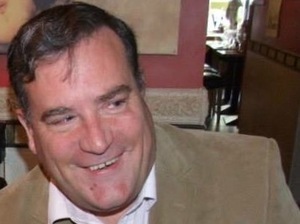

Minister for Children Katherine Zappone in the Dáil yesterday evening

Yesterday evening.

In the Dáil.

Minister for Children and Youth Affairs Katherine Zappone said Ireland would look at the Norwegian model of childcare for the phase reopening of childcare.

She added:

“Our preliminary guidance is pointing towards preparations whereby childcare will operate in pods. As far as possible, this will entail small groups of children with the same childcare practitioner in the same room with the same toys every time they are there. We are exploring the number of children that could be cared for by a single adult childcare practitioner. They will play together and will be encouraged to stay together in their pods and use outdoor spaces as much as possible.”

She later told the Dáil that “the pods plan” was “based on advice given to us by the public health expert”. It is not something that I am saying, it is the public health expert saying that.

And on facemaks, she said:

“Our preliminary advice is that the wearing of face masks by children under six years of age is unlikely to contribute to improved infection control. It may be the case that children would not use them consistently without a degree of reinforcement or coercion. This would not be desirable.”

Related: Ireland will look at ‘Norwegian model’ for reopening childcare (The Irish Times)

Meanwhile,

Um.

Kinsale, County Cork

A number of streets are being considered for pedestrianisation and a novel street pod concept, which could see diners sitting outdoors in enclosed pods, is on the cards….

Kinsale seeks reboot with ‘bold decisions’  (Eoin English, The Irish Examiner)

Transcript: Oireachtas.ie

From top: St Patrick’s Street, Cork city lockdown; Dan Boyle

I have never been a fan of the phrase ‘every crisis offers an opportunity’. At its heart is a presumption that misery can be justified if it brings about something better.

That should never be the case. What crises do though is make us evaluate the World in which we live. Ideas that once were considered implausible become valid options when contexts get reevaluated after the effects of crises have been felt.

This is the context into which new examinations of how we use our public spaces are now coming forward.

The reduction in road traffic in our town and city centres is reminding us of what might be possible. It confirms, what many of us have long held, that we have been disproportionate in how we have allocated our streetscapes overwhelmingly for the benefit of motor vehicles.

Air quality in all places is immeasurably better. It is giving us a glimpse of a better future.

Contrary to the views of some, those of us who have argued for these changes are not naive. The motor car will make a comeback. Those, who have come to depend on the personal autonomy the car provides, will demand that what they had should be restored.

Arguments will be made that public transport has become compromised, that whatever measures are put in place to maximise safety in its use, will be undermined by a lack of public confidence to use these services, at least in the short term.

That may be but cities throughout the World are aware of these possibilities and are choosing to reimagine their cities anyway. Road space is being reallocated to create wider pavements and pop up cycle lanes. The space for motor vehicles will consequently reduce.

Irish cities are beginning to follow suit. Dublin has put in place several measures to give effect to these ideas. Cork, while yet to physically put in place such measures, has identified several city centre streets for pedestrianisation.

In Cork I have been impressed that the usual negative voices are not as apparent as they had been. The myth that cars equal business thankfully seems to be abating.

Last week a report was released by Transport for London. This analysed the spending patterns of London commuters depending on their chosen transport mode.

The report confirmed what many other international reports had already stated. Cars users spend less than those who walk, cycle or use public transport, in the cities and towns they traverse.

It has been a truism that has taken so long to be accepted as being true.

I’m still expecting the car lobby to lobby to bring back the bad old days. Its affectation of being an industry is going to become quite challenged. Its model of selling as many cars as possible (whether combustion engine or electric) then encouraging consumers to quickly turnover their vehicles, will become less and less viable.

For cities like Cork I am greatly encouraged to think that ideas that have been lying on dusty office shelves, may soon become a reality.

It will be good to see them in operation on our streetscapes, instead of on the pages of those reports that only sad bores like me ever seemed to have read.

This is the most interesting Green news to have come out of Cork this week.

Dan Boyle is a former Green Party TD and Senator and serves as a Green Party councillor on Cork City Council. His column appears here every Thursday. Follow Dan on Twitter: @sendboyle

Pic Yay Cork

NaturalVision Evolved – the latest and most impressive of many mods applied to Grand Theft Auto V in the seven years since its release.

Optimising modern graphics chipsets, the mod – which you can support here, should you feel inclined – upgrades shades, textures, models, and rendering throughout, resulting in a near filmic experience

awesomer

A variety of animal breeds can now be booked to join Zoom meetings

David Brent-types are wondering how
They can make all their colleagues laugh now
If you’re in that boat
You can now hire a goat
For a Zoom call. It’s certain to wow

John Moynes

This afternoon.

Cromcastle Drive, Kilmore, Coolock, Dublin.

Gardai at the scene of a shooting incident that occurred at approximately 2pm today.  A man in his 30s was injured and was removed by ambulance to Beaumont Hospital where his injuries are described as non-life threatening.

Leah Farrell/RollingNews


Broadsheet.ie