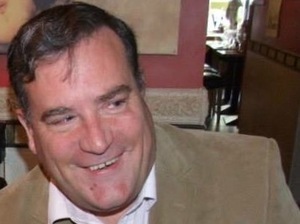
From top: Sinn Féin president Mary Lou McDonald; Virgin Media News’ Colette Fitzpatrick; Virgin Media News last night
Last night.
On Virgin Media News, broadcaster Colette Fitzpatrick interviewed Sinn Féin president Mary Lou McDonald.
It follow Sinn Féin’s Conor Murphy, who is Minister for Finance in the North, apologising to the family of Paul Quinn who was murdered at the age of 21 in Monaghan 13 years ago.
In 2007 Mr Murphy told BBC Spotlight that Mr Quinn was involved in criminality.
From the interview…
Colette Fitzpatrick: “Your party colleague Conor Murphy issued a statement this afternoon saying his remarks about Paul Quinn are a matter of regret. He said he was sorry and that they added to the grief for that family and what they felt and he wanted to apologise for that. ‘A matter of regret’. Does that go in anywhere near being enough for an apology for Breege Quinn and her family?”
Mary Lou McDonald: “Well, Breege Quinn and the family made very plain that they wanted the record set straight in respect of their son, their son who received a really, really brutal death at the hands of criminals and they felt very aggrieved. And that grief has endured over a long number of years and Breege Quinn was very clear that she wished a retraction and an apology and that it would be done publicly and on the public record.”
Fitzpatrick: “‘A matter of regret’ for saying that her murdered son was involved in smuggling and criminality…”
McDonald: “Well it’s a full withdrawal and retraction of the comments and a very sincere apology. I know I hear, earlier today, Colette, I heard Breege speaking on the radio. I know that she indicated that she had taken some comfort from the words that I had to say on the previous evening [on RTÉ’s Prime Time debate] and I hope that they take now some comfort from this complete retraction and sincere apology.”
Fitzpatrick: “Ok, how would you categorise his remarks? What would you call them? Would you say they were abhorrent? What he said about Paul Quinn.”
McDonald: “I think that they were extremely hurtful, extremely hurtful at the time when they had lost their son and they were traumatised to lose their son so brutally and so suddenly.”
Fitzpatrick: “You don’t think they were abhorrent?”
McDonald: “I think they were clearly abhorrent for the Quinn family, of course they were, Colette. I mean, I’m not, the commentary has been entirely withdrawn and apologised for and the reason for that is because the comments were wrong. At the time when this murder occured there was commentary around criminality and activities up around the Border but it is entirely wrong to suggest that Paul was in any way implicated.”
Fitzpatrick: “Ok, so you agree the comments were abhorrent. Do you think Conor Murphy should now go to the gardaí and the PSNI and tell them who the men were that he spoke to? Cause he says he spoke to men in the IRA about this. Give them the names.”
McDonald: “Well, Conor, at the time, spoke to both the gardaí and the PSNI at the time he was an elected MP for the area.”
Fitzpatrick: “Did he give them names though, Mary Lou?”
McDonald: “I don’t know, I wasn’t privy to the conversation. But you can be sure that Conor or anybody else is duty-bound to cooperate with what is an ongoing investigation.”
Fitzpatrick: “So have you asked him, have you spoken to him today and have you asked him to go the gardai and the PSNI to give them those names?”
McDonald: “Colette, it’s not necessary for me to ask Conor to do that.”
Fitzpatrick: “So you haven’t asked him?”
McDonald: “Conor has already, back when this happened, spoken to the gardai and the PSNI. And it’s for the gardai and the PSNI to advance this investigation. It’s not for me and it’s not…”
Fitzpatrick: “Yeah, but there’s a distinction, Mary Lou, between speaking to the gardai and the PSNI and giving the gardai and the PSNI the names of the men that he says he spoke to in the IRA.”
McDonald: “At the time he said that he spoke to republicans in the area because there was a speculation obviously as to who was responsible for this absolutely horrendous crime. He spoke to local republicans and they said that there was no republican involvement. But Colette, let me just repeat, in any of these investigations, it is the duty and at the discretion of the PSNI and the Garda Síochána to pursue their lines of investigation.”
Fitzpatrick: “I’m just going to ask you one final time.”
McDonald: “Sure.”
Fitzpatrick: “Will you ask Conor Murphy to give the names of those men to the gardai and the PSNI? It’s a yes or no. Will you ask him to do that?”
McDonald: “It’s actually not a yes or a no, Colette, with all due respect. It is, my position is that the investigation must be cooperated with. I mean there’s no ambiguity, there’s no lack…”
Fitzpatrick: “Well why wouldn’t you ask him to do that?”
McDonald: “Because he has spoken to the authorities already. You are inferring that in some way – and I think it’s quite unfair, if I might say so – that Conor is in some way obstructing an investigation. He’s not. At the time…”
Fitzpatrick: “But if he doesn’t give the gardai and the PSNI the names of the men he spoke to, he might possibly be obstructing that investigation.”
McDonald: “I don’t accept that. I think that if Conor or anybody else has information that is material to finding those that carried out this dastardly murder, of course they need to bring information forward. I don’t have to say that to Conor, that is as a matter of course. For Conor Murphy or for anybody else for that matter.”
Fitzpatrick: “Have you spoken to Breege Quinn yourself?”
McDonald: “I haven’t.”
Fitzpatrick: “Are you going to?”
McDonald: “I haven’t…well, if Breege wishes to speak to me, I would be more than happy to…”
Fitzpatrick: “She has said she wants to speak to you.”
McDonald: “Well that’s…I will speak to her so.”
Fitzpatrick: “When you leave this studio, could you pick up the phone and talk to her?”
McDonald: “Well I don’t have a telephone number for her.”
Fitzpatrick: “Every journalist in the country has her telephone number.”
McDonald: “Certainly if I am provided with a telephone number, I’ll be more than happy to speak to her.”
Fitzpatrick: “You’re going to call her? You’ll call her when you leave this studio?”
McDonald: “Yes.”
Fitzpatrick: “Okay. What happened to Paul Quinn on the night. He was lured into a barn in Co Monaghan and when he got there, ten or more men beat him with an iron and nail-studded bar for upwards of half an hour. His friends that were there and being held hostage at the time said they could hear the bars bouncing off him. Every single major bone in his body was broken. He was screaming and crying in agony. Horrific injuries, an excruciating death. He died two hours later in hospital. His mother said at the time his hands were so badly beaten, she couldn’t even wrap rosary beads around his fingers as he lay in the coffin. And all of that, nine years after the Good Friday Agreement.”
McDonald: “The death that Paul Quinn had was absolutely horrific. There aren’t words to describe the horror of that, of that murder.”
Fitzpatrick: “Gerry Adams made similar comments about Paul Quinn. Would you ask him to withdraw his remarks?”
McDonald: “Well look, the family specifically took issue with the remarks that Conor had made because they specifically implied – wrongly – that Paul was involved in criminality. I think other commentary..”
Fitzpatrick: “As did Gerry Adams’ remarks…”
McDonald: “Well people – Gerry made comments, others made comments also.”
Fitzpatrick: “He said criminality as well.”
McDonald: “Well people made comments about criminality up around the Border region. I don’t think the comments were quite as explicit. I mean, at the time, the then Taoiseach Bertie Ahern also made commentary.”
[On November 14, 2007, the then Taoiseach Bertie Ahern told the Dáil: “We have received a number of reports from the Garda and secondhand from the PSNI, and both of them match at this stage, that this action was due to criminality. I accept issues arise about where these people came from in the past, what they did previously and the fact that the format of the killing had a resemblance to what happened in the past. That has been in every newspaper in Northern Ireland in recent weeks. Our intelligence and information is that this was not the work of the provisional republican movement and that it was not sanctioned or condoned by it or by the Sinn Féin leadership.”
[On December 18, 2007, Mr Ahern told the Dáil: “In dealing with questions in this House and elsewhere, I shared certain information about the lines of inquiry being pursued and in speaking about criminality I was responding to questions asked on whether the murder had a political motivation or implications for the Northern Ireland Executive.
“I did not in any way intend to make an issue out of the character of Paul Quinn and I am happy to make that clear to the House.
“It remains the case that no information is available to me from the Garda Commissioner to suggest this attack was authorised or sanctioned by the IRA, a question I am continually asked outside the House….I am glad to state what the Minister told the family yesterday, that we have no evidence whatsoever that Paul Quinn was involved in criminal activity.”]
Fitzpatrick: “I’ll tell you exactly what Gerry Adams said. He said ‘linked to fuel smuggling and criminal activity’, that’s what he said Paul’s Quinn murder was, ‘linked to fuel smuggling and criminal activity’.”
McDonald: “Yes and others made those remarks as well. I think – and I can’t pretend to speak on behalf of the family – but I think what they took exception and hurt from what Conor said is that it was more explicit in relation to Paul. And Colette, I’m not trying to explain of this away: the remarks have been withdrawn. That was the correct thing to do.”
Fitzpatrick: “But it has taken 13 years for this to happen. Why has this taken so long?”
McDonald: “It shouldn’t have taken so long.”
Fitzpatrick: “Why suddenly has Conor Murphy apologised in the middle of an election campaign?”
McDonald: “It shouldn’t have taken 13 years, these matters should have been clarified and the Quinn family should have been given that easement a long, long time ago.”
Fitzpatrick: “You were asked about this a number of times over the last couple of days and you haven’t dealt with it until today, or Conor Murphy hasn’t dealt with it. And the issue is: Was someone telling you what to do? Was someone advising you, on this, on what to say or do? Were you taking instructions from anybody on this?”
McDonald: “Absolutely not, Colette. Absolutely not.”
Fitzpatrick: “Are you sure?”
McDonald: “I am absolutely certain of that point. Breege Quinn was on the RTE airwaves. She made her position clear. I was then subsequently, because we are in an election campaign, I was asked on the matter naturally. And I moved to speak… ”
Fitzpatrick: “Because the charge is that there are shadowy figures…”
McDonald: “That charge is entirely…”
Fitzpatrick: “…telling you and Michelle O’Neill what to do.”
McDonald: “And do you actually believe that, Colette?”
Fitzpatrick: “It’s not for me say whether I believe that or not. That’s the charge that’s been laid against you and Michelle O’Neill.”
McDonald: “Let me refute, in the strongest terms, that charge. Nobody tells me what to do. Nobody pulls my strings or Michelle O’Neill’s. We are entirely capable of arriving at decisions and making our own decisions. I know my own mind, I also know right from wrong and I make my own decisions.”
Fitzpatrick: “The PSNI said that the IRA Army Council still retains an oversight of Sinn Féin. They said that back in the…”
McDonald: “Well they’re wrong. That is entirely, entirely farcical. And can I just say to you, as it happens, yesterday, Michelle O’Neill in the North, the Joint First Minister, was actually present at the beginning of recruitment campaign for the PSNI because the policing service has to be representative – sorry [as she was being interrupted] – of the community that it serves. So those remarks are wholly wrong and wholly inaccurate.”
Fitzpatrick: “Ok.”
Yesterday: How Was It For You [Updated]
Previously: Will I Get The Coronavirus If I Vote Sinn Féin?