Connemara Galway Hotel

Pat McGrath, of RTÉ News, reports:

A tender to provide a direct provision centre at a hotel in Oughterard, Co Galway, has been withdrawn by the applicant.

Speculation that the former Connemara Gateway Hotel was to be repurposed as a centre to house asylum seekers has led to a round-the-clock protest by locals in recent weeks.

Following discussions with protesters, construction workers are entering the site this morning and removing tools from the hotel.

Tender over Oughterard direct provision centre withdrawn (RTÉ)

Previously:  In Galway

Meanwhile…

Kinsale Road Direct Provision Centre in Cork

This morning.

Roos Demol has said that after five years of bringing clothes to people who live in the Kinsale Road Direct Provision Centre in Cork, she’s been told to stop.

Roos, who is originally from Belgium and has been living in Ireland since 1998, is an intercultural facilitator and blogs on immigrantinirelad.com.

She tweetz:

Anyone?

Previously:  Boy From Burundi

“What Has This Guy Been Saying to Other People?”

An animated music video for Quebecois band Corridor by Jonathan Robert and Gabriel Favreau in which we ascend via stairs, lifts and cable cars though a bewildering structure toward an encounter with the almighty computer that controls all.

awesomer

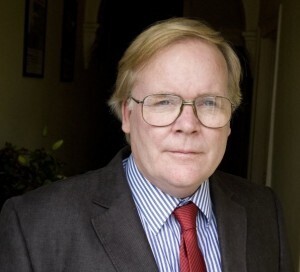
From top: Taoiseach Leo Varadkar and Minister for Finance Paschal Donohoe; Michael Taft

The Taoiseach, in discussing a tax package for the upcoming budget, recently said:

‘ . . . there were lots of different ways to put money back in people’s pockets.’

Too true.

So let’s look at some of the ways Budget 2020 could put money into people’s pockets.

Cost Rental Housing

Build housing that would be rented at cost. Rents are going through the roof – even the Minister for Housing admits levels of rents are unsustainable. Cost rental housing could reduce rents by hundreds of Euros a year, driving down rents to levels that exist in other European capitals (that is, cutting rents in half). This would, however, take time to roll-out.

So in the short-term the Government should pass emergency legislation to freeze rents for three years with increases confined to inflation increases (no doubt, this would end up in courts). Further, new units coming into the market would be priced to the average of similar units in the locality.

Affordable Childcare

Childcare is treated as a market commodity. No wonder it costs twice as much as in other EU countries. However, affordability won’t be easy with over 4,000 early years’ providers. The first step would be for the Government to admit the current system is incapable of being reformed.

A new, public service model will be required – substantial public investment in the sector combined with some sort of fees cap. Or the Government could start to roll out local authority providers as exist in other countries. It should set out a road-map and start walking it with this budget.

Public Transport

We will need significantly increased investment in accessible public transport – for climate reasons, for productivity (reduce congestion). The budget could start that, coupled with a 50 percent reduction in fares.

Security against Unemployment

We know there will be job losses due to Brexit and the transition to a renewable energy regime. So let’s help households, shore up consumer spending (which protects jobs in other sectors) and build some resilience in the economy – introduce pay-related unemployment benefit at between 50 percent to two-thirds of the previous wage. This is the standard approach throughout the EU.

* * * *

There are other examples but what all these amount to is a ‘tax’ on living standards; or a social tax burden. By and large, these tax burdens can only be alleviated by the state. But, unlike income tax cuts, they can realise substantial savings even with slight alleviations. For instance:

* Reducing childcare from €184 to €120 – which would still see Irish childcare costs as one of the highest in the EU – could save households over €2,500 a year.

* Reducing rents by 10 percent through cost-rental housing could save Dublin tenants €2,000 on average

* A 50 percent reduction in Dublin public transport could save commuters over €800 per year on a monthly pass

* A pay-related unemployment benefit of a modest 50 percent of previous wage, for an average full-time employee (€45,000), would see their benefit rise by over €200 per week.

Even these slight alleviations would create considerable savings for people – far higher than any tax cut. And the costs are not as high as one might think.

For instance, increasing the universal childcare subsidy to a level that would reduce childcare fees to €120 would cost €66 million (though there is still the issue of ensuring that savings are passed on).

Cutting public transport fares by half would cost €300 million.

A programme of building cost-rentals in urban areas could be financed out of the NAMA surplus.

And introducing a pay-related unemployment benefit could be financed by a fractional increase in employers’ social insurance (0.2 to 0.3 percent) – and if there is understandable nervousness about increasing this if the economy goes south, there is still enough of a surplus in the Social Insurance Fund to temporarily fund this.

And it’s not like this money disappears.

The increased income will, for the most part, be spent in the productive economy which could make for an excellent counter-cyclical policy.

The Taoiseach is right. There are many ways to put money in people’s pockets.

There are cost efficient, socially equitable, economically effective and environmentally friendly ways – such as reducing the social tax burden.

Michael Taft is a researcher for SIPTU and author of the political economy blog, Notes on the Front. His column appears here every Tuesday.

Rollingnews

China’s Communist Party marked its 70th Anniversary with a parade in Tiananmen Square, Beijing yesterday

Xi started the celebration
With a forthright and long explanation
Of the strength of his land
Its history and
Said no one could shake this great nation

John Moynes

Gettty

John Wall (left) and Minister for Health Simon Harris

This evening.

Father-of- three John Wall, aged 48, from Quin, Co Clare, who following a diagnosis of terminal prostate cancer had his Emergency Medical Card abruptly revoked twice, writes:

I met today with Minister of Health Simon Harris and senior representatives from the Department of Health, Primary Care Reimbursement Service and the HSE.

The meeting lasted well over an hour.

A full apology was received from the Deprtment of Health and the HSE for my experience to date regarding the Medical Card fiasco
.

Initially, the minister committed to establishing a review group to ensure that my issues are not repeated. Items to be reviewed include the application process, patient communications and generally enhancing the process to ensure a more streamlined experience.

That group will be comprised of department officials, representatives from various NGOs, including the Irish Cancer Society, Marie Keating Foundation and myself. It will be established before the end of November.

Of significance, there was a commitment to review the Terminal Illness Card with specific reference to the current necessity to be have a prognosis of 12 months or less left to live.

I have campaigned for this period to be significantly extended as it is my firm belief that terminal patients should be entitled to a terminal illness card without the current limitation attached.

Of note is that, once approved, this type of card will never be reviewed nor ever expire.

Separately, I will be working alongside the National Cancer Control Programme as a patient representative which will give me a platform to influence the National Cancer Strategy from a patient’s perspective.

Overall, it was a very productive meeting that met expectations and will lead to significant change which will, in turn, lead to a significant overhaul of the Medical Card system and the associated application process.

I very much look forward to working alongside the various government departments for some time to come and very much welcome the minister’s intervention, commitment and time on issues that have personally become very important to resolve and, as a result of today’s meeting, I am confident they will be.

In fairness.

Previously: John Wall: Notes On A #medicalcardscandal

They Come Up Against A Wall

Delicious.

Spochadóir tweetz:

Lads I bought a fu**in jambon and a cup of coffee this morning at a filling station in Longford and it cost €5.40.

Now, I’m no fu**in’ economist but I’m a great man for a filling station breakfast and lemme tell ya fu**in something, the arse is about to fall out of the economy….

No need for the language but anyone?

Pic: Our Best Bites

On Thursday.

Ireland will play Russia at the Kobe Misaki Stadium in Kobe City, Japan, in the Rugby World Cup with kick-off taking place at 11.15am Irish time.

Further to this…

CEO of Vodafone Anne O’Leary tweetz:

On Thursday [Ireland’s rugby team] take on Russia during office hours. Vodafone employees are getting 2 hours off to watch it. Canterbury of New Zealand, Aer Lingus & Diageo Ireland, I challenge you to do the same and nominate 3 other businesses. Here’s a note from Joe [above] to help!

*Pass it on*.

UPDATE:

Oh.

Ireland V Russia

Broadsheet.ie