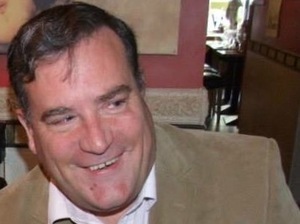

From top: Thousands returned home to vote in last week’s referendum: Dan Boyle
There’s a huge temptation to read too much significance into the results of the Repeal the Eighth referendum. However, as giving into temptation is pretty much what we do these days, I will stand first in line in the queue for Bishop Kevin Doran’s confessional, to ask what I see as some pertinent questions.
The first is whether our Constitution continues to be fit for purpose. There is a slew of proposals that have come from the Citizens’ Assembly that deserve, even demand, answering.
As I was a one time member of the All Party Oireachtas Committee on The Constitution, there are plenty dusty reports on a shelf somewhere that contain many similar, good, recommendations.
Given the scale of change being suggested, would this demand best be met through drafting a new Constitution?
I think probably not. It would be a mistake to assume that largely the same coalition of voters will fall in line for every subsequent proposed change.
Besides, outside of some glaring provisions, Bunreacht na hÉireann is not such a bad document. It is progressive in many respects, let down by the inclusion of some provisions included to placate those who were once given too much deference in our country.
Before considering the architecture of our Constitution should we not be asking who The Constitution is for?
The image of returning emigrants, during the last two referenda, fed into a change is possible narrative. It was an encouraging narrative fuelled by thousands of inspiring images. Given the scale of the victory margin in each referendum their presence wasn’t strictly needed, although their visual support was vital.
Technically many of these were illegal votes, as some of the people involved didn’t fulfil the necessary residency requirements. Shouldn’t these provisions be the next legislative/constitutional changes to be considered?
Irish citizens should have a right to engage in these discussions, and then act upon, any change mooted in our Constitution, from wherever on the planet they find themselves at any given time.
Such a change would present a huge logistical challenge. More Irish citizens live outside our State than within it. Some may never have physically lived here. Of those who did emigrate, the longer the time away the further will be the ability to know and understand our country as it is today. Those Irish citizens who voted for Donald Trump could be contributing to shaping a very different Ireland in the future.
And yet these provisions seem to operate without much difficulty in other countries.
With an appropriate time stipulation, say no more than five/ten years living outside the State, any Irish citizen should be able to register and vote at their nearest embassy/consulate.
This should give a right to vote on The Constitution, vote for their choice as our first citizen, and possibly even for emigrant representation in the Seanad. I think that most would agree that the taxation/representation axis will continue to hold true for elections to Dáil Éireann.
We need to do is better recognise our history as a migrant nation, while attempting to hold on to the link that binds together our citizens throughout the World.
I believe we could hold a civilised debate on this subject. That is if you ignore the fact that I make this argument as something of a Trojan Horse, being more eager to revisit the 27th amendment to the Constitution on Citizenship made in 2004.
Dan Boyle is a former Green Party TD and Senator. His column appears here every Thursday. Follow Dan on Twitter: @sendboyle
Pic: HAWK