The Sunshine Factory – releasing new single Cruelest Animal
What you may need to know…
01. Leeside neo-psychedelia five-piece The Sunshine Factory are on a roll after less than a year together.
02. In that short span of time, they’ve put together their first demo cassette, sold out hometown shows, and gone on Irish tour with UK psych legends The Telescopes.
03. Streaming above is their FIFA Records debut, a newly gussied-up take on early track Cruelest Animal.
04. They’re launching the aforementioned tomorrow night at DeBarra’s in Clonakilty and Saturday night at the Crane Lane in Cork.
VERDICT: Dreamy, hazey psych-pop perfect for the humid, dead air of the end of the summer. Grand.
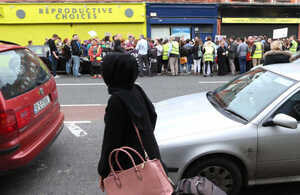
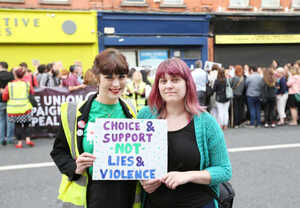
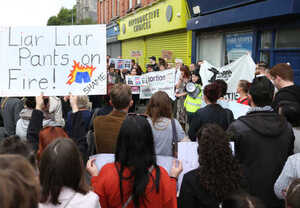
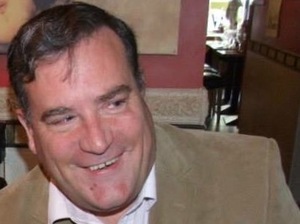
Scenes from a pro-choice protest, joined by Clare Daly TD (pic 4), against the pro-life abortion advice centre exposed by The Times Ireland edition on Monday.
No one thought that we could, but somehow
We’ve survived forty years without Mao
To him all is owed
And to stray from his road
Is something that can’t be allowed.
Stephen Donnelly was the right man in the wrong party.
Dan Boyle writes:
A project I have been looking forward to see being brought to completion, early next year, is the publication of my third book.
My first two books centred around the development of the Green Party in Ireland and on our experience of being in government. This book is examining the general impact of smaller parties in Irish politics. It’s an impact that I believe has been largely positive.
My motivation in writing the book, among other things, is to record the phenomenon of smaller parties in Ireland, at a time when they seem to have become most entrenched in our political system. A more diverse politics helps to avoid a closeted and claustrophobic system.
At least that has been the basis of my thinking until this week.
Stephen Donnelly is someone I always thought as being incongruous as a Social Democrat. Socially progressive certainly. Dedicated to achieving and applying the highest possible governance standards to the State and to agencies of the State, undoubtedly. An asset to Dáil Éireann and to Irish politics, inarguably.
He is, however, a fiscal conservative/a classic Liberal.
Which is fine in its own right. We could do with more of his ilk to honestly expound on such positions. He isn’t though a Social Democrat.
It was a mistake for him to be involved in the formation of the Social Democrats. A mistake now compounded by his decision to leave so soon afterwards. I fear he may become perceived as his generation’s Noel Browne – talented but mercurial not being seen as being able to work with others.
I had thought the Social Democrats have had an opportunity to cleave a new niche among the left in Ireland. They have been well positioned to benefit from those unhappy with Labour and uncomfortable with Sinn Féin.
The General Election came too soon for the party. The opportunity to be better prepared did not exist.
A significant strategic mistake was also made in not contesting every constituency. A national vote for the Social Democrats should have been maximised.
By not doing so the party is now more likely to share the trajectory of the Progressive Democrats, becoming reliant on a handful of flagship constituencies, without extending or expanding its national base.
A possibility for a new party on the left in Ireland has now probably receded.
Consolidation would be a more fruitful path to follow. With the proliferation of egos that exists in the sector, and the angels on the head of a pin approach to ideological purity, this seems even less likely to occur.
We could take a more optimistic view and say that Brendan Behan’s maxim that the split is first item on agenda of every new Irish political organisation, no longer holds true.
That now takes at least eighteen months.
Dan Boyle is a former Green Party TD and Senator. Follow Dan on Twitter: @sendboyle
“I wish to address the integrity of our tax system. The laughable suggestion is that we must lodge the [Apple tax ruling] appeal in order to defend its integrity.
The first of the tax rulings was in 1991, the era of Ansbacher and Charlie Haughey. Via Ansbacher accounts, the Irish rich had been siphoning off money that was onshore but supposedly offshore since 1971.
Only political pressure, outrage and exposure, not Revenue, forced the establishment of the McCracken tribunal.
It was only in 1999 that Revenue finally decided to start investigating the matter and uncovering the funds. Is our tax system so covered in glory that we would not question its integrity? I am afraid not.
The tax ruling of 2007 is what I really want to discuss. Something was raised at the committee about which we were not allowed to ask questions of Apple and Facebook because the Government side turned off the cameras and voted down the proposal.
A paper produced by the Department of Finance, authored by Mr. Seamus Coffey, showed some of the figures. Nobody bothered to read them, as is so often the case, but the truth is in them.
I refer our economic and political correspondents to pages 27 and 28 of the Department’s paper on Ireland’s effective corporate tax rates. They show something incredible.
The average amount of what are called deductions – parts of companies’ profits that can be written off from their tax liabilities as costs – jumped from an average of approximately €2 billion in 2004 and 2005 to €21 billion in 2011.
God knows what they were subsequently, as we do not have the figures and cannot get them from Revenue for four or five years after the fact, which is another scandal.
The amount of tax at 12.5% that these companies could write off jumped over four or five years by €19 billion.
The greatest jump in that write-off came after the 2007 ruling, when it increased from €6 billion to €19 billion before increasing to €21 billion within a year or two.
It may well have increased much more afterwards but we do not have those figures. We need to see them.
From 2007, total taxable income in the corporate sector dropped from €56 billion to €37 billion. That nearly €20 billion is almost exactly the same as the deductions allowed.
The paper helpfully mentions that this can be explained by patent royalties paid by certain multinationals to their subsidiaries. The ruling gave them certainty that they would be allowed to write their own tax bills indefinitely. The Government colluded to cover this up until now.
The paper that the Government distributed last night and that is also a part of the cover up helpfully tells us about a few points.
In 1991, a basis proposed by Apple for determining the net profits of Apple Computers Accessories, now the ASI branch, was agreed by Revenue.
Apple told Revenue that it had a proposal on how the latter should calculate its profits. It did that again in 2007.
Does any other taxpayer get the opportunity to tell Revenue how to calculate his or her tax bill?
This is the Government that will deduct unjust property taxes from people’s wages if they do not pay. This is the Government that will send police out against anti-water charges protestors because they are unable or unwilling to pay unjust water charges. This is the Government that inflicts the brutal austerity imposed by the troika to pay off the gambling debts of banks and financial speculators regardless of the hardship suffered by ordinary people.
When it comes to Apple, Google and Facebook, however, we protect them and they can make their own tax arrangements.
This is what happened. No arm’s length principle, no equality, no tax justice. They tell Revenue how to calculate their tax and Revenue does it.
Please do not tell me that, when the allowable deductions from profits jump by approximately €18 billion or €19 billion in two or three years, the Government and Revenue did not notice or that the Government did not know that these profits were being shifted to companies that had tax residencies nowhere in the world.
…Everybody knew that they were involved in massive tax evasion but we chose to turn a blind eye and, indeed, to put in place the mechanisms that allowed them to do it.
We then resisted the calls to close down that loophole. The Government now claims that it has done so but it has given a sunset clause under which the same companies and no other can avail of the double Irish until 2020.
In the meantime, the Government has developed a patent box that will allow them to do the same thing in a different way, that is, write off the profits generated from upgrading an iPhone or Apple computer against the cost of new innovations and developing new patents.
Apple is appealing, so we will not be able to spend the money anyway, but how much weaker would Apple’s case be if the Government accepted the ruling because it was true that we had done something wrong?
Everyone knows that we gave selective advantage to these corporations. I have just provided the hard evidence contained in Revenue’s tables, which show that Revenue must have known.If it and the Government did not notice this scale of profit shifting, they should be flung out on their ears. Of course they noticed it.
If we put up our hands and admit that this was wrong and that, as everyone knows, these companies were evading tax to the tune of billions of euro, Apple’s case against the European Commission would collapse.
Maybe Apple would pursue it, maybe it would not, but its case would be significantly weakened if we did the honest and fair thing from the point of view of our citizens.”
Richard Boyd Barratt TD of people Before Profit/Anti-Austerity Alliance speaking during today’s debate on the Apple Tax ruling appeal.