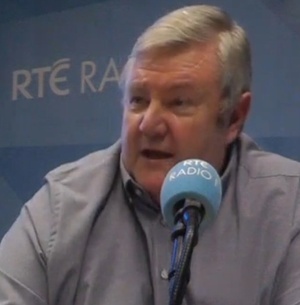



From top: Des O Malley (left), following his resignation as leader of the Progressive Democrats on September 5, 1993; “I’ve never laid a brick before,” joked Tánaiste Leo Varadkar while holding a concrete block at the Galway City Innovation District last Friday

A weekly round-up

In a photo op the Tánaiste Leo Varadkar went tricking around with a concrete block, which he referred to as a “brick”. Later, hard hat still on, he turned his builder’s eye on twitter and decided it was actually a sewer. One whose passages he’s often seen to scuttle through, both as himself and in disguise.

Speaking of building, Patrick Freyne had an excellent piece in the Irish Times about the small cottages in Dublin’s docklands being dwarfed by high rise buildings. But given that this was the Irish Times, Freyne felt it necessary to mention that two of the people finding themselves buried alive in this manner had a “beautifully tended garden”, just in case you might be thinking that they were tasteless working-class lazybones deserving of all the annoyances big business can inflict on them.

Why do ordinary people always have to prove they are good and decent people, undeserving of the crap that is often dumped on them by the generally awful people of big, unanswerable money?

Climate

Anyway, it hardly matters anymore, the way things are going we’ll all soon be washed away in a flood, fried like eggs on a griddle or simply starve to death from food shortages.

Will I tiresomely point out once again the relationship between neo-liberal policies – perpetual growth in a finite system – and climate change? No, I won’t. I’ll get in line with the delusionary talk, in the belief that thinking positive will somehow fix the climate.

RTÉ news reported that Madagascar is the first country in the world in the process of being almost totally destroyed by climate change. The people are starving due to drought and crop failure. This, according to scientists, will be the likely scenario for much of the Southern part of the African continent.

But David McWilliams in the Irish Times, thinking positive, countered this bleak view with the idea that Africa, due to demographic anomalies, would actually one day be the richest continent in the world, because everyone else is dying off. Given climate change, that sounds like traditional African bad luck to me. The meek shall inherit a scorched Earth with occasional severe flooding.

Des O’Malley

Desi O’Malley died. Known as the best taoiseach Ireland never had, there were fitting tributes from all sides of the political spectrum, as they say on RTÉ.

My one abiding personal memory of him was when I attended a rally in the 1980s, in Galway’s Leisureland, when the Progressive Democrats (PDs) formed. I was there more out of curiosity than any particular interest in the PDs, and simply because I happened to live nearby at the time. All the representatives of the new party were seated at a long table on the stage, not unlike the arrangement for the last supper. There was a podium out front from where Mary Harney stirred the partisan crowd to whoops and cheers with fiery rhetoric flung around the place more for effect than sense.

But the highlight for me was that Des O’ Malley kept dipping his head beneath the table while Mary roused the rabble. I wondered what he was doing and watched carefully to see that he was actually sneakily smoking cigarettes down there. That, in a way, formed my political opinion of the PDs. They were wont to sneak away to do things you mightn’t like.

Man Up Van

Van Morrison is still going ballistic about live gig starvation, demonstrating how much he really needs an audience to maintain his emotional equilibrium. I love his music, his style, his soulful singing. But in relation to the pandemic, he has been coming across as an awful prima donna. Man up, Van.

Across the water Boris Johnson declared that he had never lied to anyone, despite there being ample evidence everywhere that he had lied at one time or another to practically everyone. People rose up in indignation in the twitter sewer, apparently not realizing that he was actually just lying again.

Meanwhile in Tokyo, someone on the Irish Olympic team had the good idea for the team to bow to their Japanese hosts in a gesture that was both heart-warming and appreciated. Now that’s style.

Future’s So Bright…

The Galway Film Fleadh (FlimFla) did its thing in a local park to avoid the not so great indoors. This one was different because, even despite the heatwave, mask-wearing has curtailed the donning of serious sunglasses, changing the entire tone of the festival. What is it with plonkers who stare you down from behind dark glasses?

Meanwhile the pandemic continues. On Friday I heard at least a dozen ambulance sirens during the course of the day. While they might not all be virus related it added to the sense of urgency and panic. Or maybe they were just people being rushed to hospital from the Film Fleadh, blinded by the sun.

Finally, in a polity that can’t seem to regulate big business, greedy landlords, exploitative employers and corporate tax-dodgers, officials become Mr Speed when it comes to regulating soup kitchens. That, in a sense, is all you really need to know about FFFG Ireland. We can turn a blind eye to tax-haven billions, but we absolutely won’t tolerate possible low standards in soup kitchens.

Still, it’s not all bad news. Soup kitchens or not, the Indo reported that the Irish are now, proudly, the fattest people in Europe. It’s either a feast or a famine around here – and often at the same time.

Eamonn Kelly is a Galway-based  freelance Writer and Playwright. His weekly round-up appears here every Monday.

Previously: Eamonn Kelly on Broadsheet

RollingNews

This morning.

Meanwhile…

Fight!

Last week: Not Quite The Same Thing

Saturday.

A full sweep of protestors marching to Government Buildings against covid restrictions and passports. RTÉ and other mainstream outlets estimated the number of protestors attending at approximately 1,500.

YOU must decide.

Saturday: A Bridge Too Far

RollingNews

Earlier.

Regulations published in the early hours of this morning forbidding entrance to restaurants and pubs to the unvaxxed.

Businesses that do reopen will qualify for 30 pieces of silver a three-week double payment of the Covid Restrictions Support Scheme.

Good times.

Contact tracing change to indoor dining regulations – RAI (RTÉ)

Meanwhile…

The Zen Arcade – High Fidelity

Zen and the art of power pop maintenance.

Featuring three members of erstwhile Cavan band The Strypes, The Zen Arcade return with a new EP whose title track is named after the group’s own popular podcast.

The video was directed by Pete O’Hanlon.

Nick says: Arcade on fire.

The Zen Arcade

Derek Mooney

Welcome to my fifth annual summer political reading list. As the name suggests, the books on the list have a political theme or connection. All the books in this year’s selection are non-fiction and reflect my own tastes and prejudices.

I have included a few biographies, histories, and polemics on issues of domestic and wider interest.  While none of the books could be said to be a light read, they are not heavy going either. They are all well-written and accessible. Most have been published over the past 6 – 12 months, which means they are mostly hardbacks.


From Whence I Came, Editors Brian Murphy & Donnacha Ó Beacháin

This is a collection of original essays on the Kennedy legacy and the special political ties between Ireland and the United States. Contributors include the editors, both key figures behind the annual Kennedy Summer School, plus a stellar cast of informed and interesting writers, such as Cody Kennan, President Obama’s former speechwriter, Kerry Kennedy, President of the RFK Human Rights organisation and Tad Devine a former senior adviser to Bernie Sanders, Al Gore and John Kerry election campaigns.

In addition to being a cracking good read, all editor royalties are being donated to the New Ross Community Hospital in memory of the late Noel Whelan.

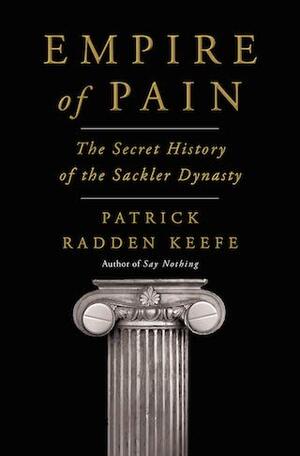
Empire of Pain: The Secret History of the Sackler Dynasty by Patrick Radden Keefe

I came to this book via the author’s brilliant 8-part 2020 Podcast series Wind of Change. That explore the remarkable claim that the hit song at the time of the fall of the Berlin Wall: “Wind of Change” was in fact written by the CIA as part of a pys-ops campaign to foment a clamour for democracy behind the Iron Curtain.

One of the Podcast’s bonus tracks is Reddan reading Chapter 16 of Empire of Pain. It’s a pleasing and tempting appetizer.

In Empire of Pain, Reddan details how the Sackler family built a multi-billion fortune on producing and marketing Valium and then saw their reputation, though not their fortune, ruined by their aggressive and reckless marketing of OxyContin, a powerful prescription pain killer. OxyContin has generated over thirty-five billion dollars in revenue but has also been the catalyst for an American opioid crisis that has killed hundreds of thousands.

It is devastating portrait of a super wealthy family who lavish donations and endowments on the arts and the sciences while deploying scorched-earth legal tactics to evade any accountability for their products and crush anyone who dares to challenge them.

An Ugly Truth: Inside Facebook’s Battle for Domination by Sheera Frenkel and Cecilia Kang

Though there is no shortage of excellent books and documentaries on Facebook, this one stands out because the authors tell the overarching story of the world’s largest social network in considerable depth and detail.

The New York Times review described the authors as producing “the ultimate takedown via careful, comprehensive interrogation of every major Facebook scandal”. While it can be seen as a takedown, you still don’t get the sense that the authors intended this as a hatchet job.

Their research leads where it leads… and, unfortunately for Zuckerberg, Sandberg and others, that leads to a top layer of Facebook executives exhibiting naïve hubris at best and toxic levels of factionalism and corporate cynicism at worst. It’s a chilling, but fascinating read, that details the problems, but can offer no solutions.

Political Purgatory: The Battle to Save Stormont and the Play for a New Ireland By Brian Rowan

I know many folks’ eyes will glaze over at the mention of the words Northern Ireland, but like it or not, the politics of the North matter across this island, and the neighbouring one too.

Political Purgatory by the respected political journalist Brian Rowan impartially charts the events of the past four years in careful and meticulous detail with valuable insights from key current, and past, political players.  The result is an essential primer for anyone looking to understand the political impact of Brexit, NI Protocol on what is happening at Stormont, and on relations with Dublin and London.

At just 80 pages, Dr Kathy Hayward’s The Irish Border What Do We Know and What Should We Do About…  is both a valuable and concise companion to Brian Rowan’s Political Purgatory.  Very few academics have written as knowledgeably and accessibly about the impacts of Brexit on relations on and across these islands as Kathy. Her book is detailed and informed examination of the political, economic, social and emotional impacts of the Irish/Irish border and the extent to which its existence has helped define unionism.

Agents of Influence: Britain’s Secret Intelligence War Against the IRA By Aaron Edwards

Sticking with the North… well, kind of… Belfast born historian and lecturer in defence and international affairs Aaron Edwards charts just how comprehensively British Intelligence infiltrated the provisional IRA and Sinn Féin during the height of the Troubles.

While we know the codenames and stories of some of the Brits most infamous agents, such as Stakeknife and Infliction, it seems the penetration of the Provos by the British Army’s notorious FRU (Force Research Unit) was both deeper and higher than thought – though how much we can now believe either side from a murky battle where truth was the first, but alas not the only casualty, is a question the reader should ask themselves throughout.

Nonetheless, Edwards attempts to tell the story fairly by way of now declassified documents and the first-hand testimonies of agents and their handlers. The book is a follow-up to his 2017 work: UVF: Behind the Mask a history of the vicious loyalist terrorist group from its post-1965 incarnation through its sickening list of atrocities, such as  McGurk’s Bar, the Dublin and Monaghan bombings and the Miami Showband massacre.

The next two picks are personal indulgences. Though LBJ remains my favourite (though flawed) American political figure of the 20th century, I am also fascinated by US politics kin the second half of the 20th century, perhaps due to the many larger than life figures who dominated the era.

The first book looks at one US political figure whose name you rarely hear mentioned these days, Spiro T. Agnew. For good reason too. Agnew, who served as Richard Nixon’s Vice President from 1969 to 1973, was a complete crook.

Agnew was forced to resign as Vice President after federal prosecutors uncovered his involvement in bribery, corruption, and extortion as Governor of Maryland, including taking kickbacks from local state contracts even after he entered the White House. Not that he went easily, a plea agreement saw him plead nolo contendere (no contest) to a single charge of tax fraud and so he was spared any prison time.

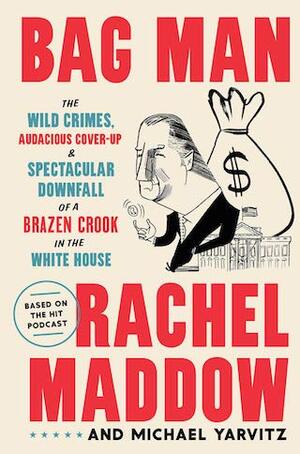
Bag Man: The Wild Crimes, Audacious Cover-up, and Spectacular Downfall of a Brazen Crook in the White House by Rachel Maddow, Michael Yarvitz tells the story of Agnew’s undeserved rise, but well-earned fall with both wit and style. It is a remarkable political scandal which we have all but forgotten as it was quickly surpassed by the Watergate revelations. While reading it do not forget that if the Maryland prosecutors had not been so assiduous, Nixon would have been succeeded by Agnew and America would have wound up with having two Presidents impeached, in succession.

The Man Who Ran Washington: The Life and Times of James A. Baker III By Peter Baker, Susan Glasser

The second personal indulgence book is a biography of James A. Baker III, one of the GOP’s most accomplished political leaders. It serves as a welcome antidote to the Agnew book.

A legendary White House chief of staff and secretary of state, Baker was a power broker and pivotal figure in both Republican and American politics for a quarter-century after Watergate. As the blurb observes no Republican won the presidency without his help or ran the White House without his advice, for all that time.

It is well titled. Baker really did understand better than anyone how to make Washington work. He knew how to negotiate and how to make, and deliver on, agreements. He was a tough election campaigner, but also understood the need to work with Democrats to deliver on the domestic agenda – a skill that today’s Trumpian GOP has either forgotten or chosen to ignore.

I was about to close the list here, but I have two other books I want to quickly include. Both deal with the UK’s continuing problem understanding its place in the modern world. A problem witheringly identified by the former US Secretary of State, Dean Acheson back in 1962 with the line: “Great Britain has lost an empire and has not yet found a role”. 

The first is: Empireland. How Imperialism Has Shaped Modern Britain by Sathnam Sanghera. Sanghera looks at the legacy of empire and where so many of today’s little Englanders only see light and dismiss any criticism of empire as unpatriotic, he shows that there is much about it that is dark and hidden. He does not approach the subject as a historian, but rather as a journalist. The net result is a book that tackles Britain’s collective amnesia over its colonial past but also shows how the Brexiteer dreams of reviving colonial links to replace trade with the EU are based on myth.

The second book is an even more critical assessment of the legacy of empire. Time’s Monster: History, Conscience and Britain’s Empire by Priya Satia is an important corrective to the heaving shelves of British Empire histories. While Dr Satia has produced a highly critical history of a British imperialism rooted in violence and inequality, it is less a corrected history of the empire and more a detailed examination of how and why British historians sought to frame how the empire was understood.

****

So, that’s my list. I hope you can check out a few of them over the coming weeks.

I will be back here in early September, well-watered and rested and ready to offer my thoughts on what’s happening, and what’s not happening on the Irish political scene.

Who knows, perhaps I will be able to explain why An Taoiseach Micheál Martin disingenuously claimed in yesterday’s Sunday Independent that:

“Some commentators choose to ignore that in four recent face-to-face opinion polls, my party [Fianna Fáil] was at between 20% and 22%.”

A claim curiously foreshadowed by a political commentator in Saturday’s Irish Times.

There have been 39 national newspaper opinion polls since GE2020. Fianna Fail’s average rating across all 39 is 15.6% (its median rating is 17%). While four polls since January 1st 2021 have shown FF at 20% or 22%, the other 14 polls taken over that period showed it at anywhere between 11% and 16% (averaging 14.1%).

As I pointed out here a few weeks ago:

Even the more optimistic Irish Times/Ipsos-MORI poll finds that Fianna Fáil is in 5th place on just 8% among Dublin voters aged below 35. Their poll results put it almost 30pts behind Sinn Féin, 13pts behind Fine Gael and 9pts behind the Greens.

… so if this claim is central to Martin’s personal defence, then his case is about to collapse.  Enjoy the rest of the Summer, wherever you get to spend it.

Derek Mooney is a communications and public affairs consultant. He previously served as a Ministerial Adviser to the Fianna Fáil-led government 2004 – 2010. His column appears here every Monday. Follow Derek on Twitter: @dsmooney

Rollingnews

Rob Cross tweetz:

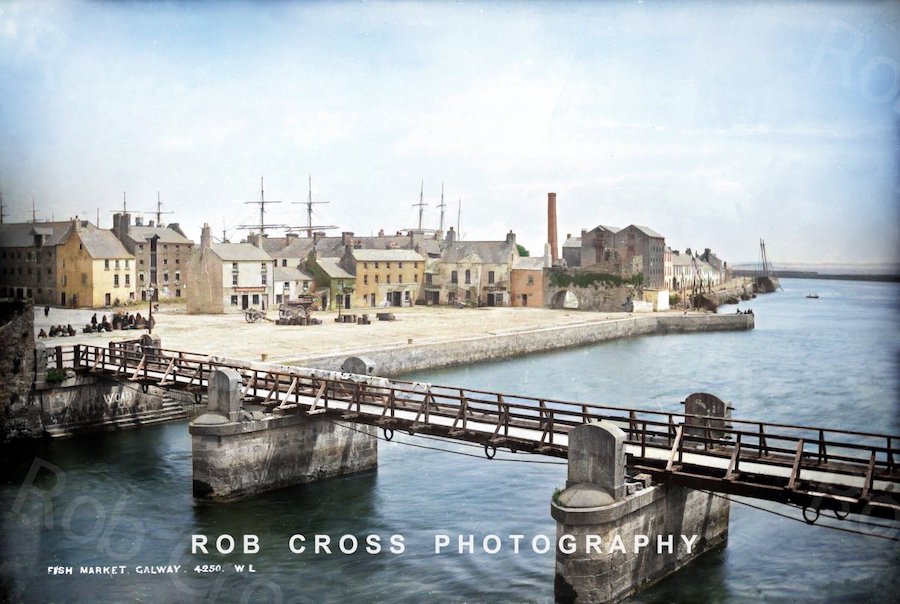
My colourised 1900c Robert French photo featuring the old Claddagh Bridge which linked the Fish Market and the Claddagh in #Galway City. The bridge was constructed in 1887 and replaced by the Wolfe Tone bridge in 1934.

The old Claddagh Bridge washing line.

A large meteor lights up the sky over Holmestrand, Norway yesterday morning

In Norway, which isn’t that far
Some fragments of a falling star
Came down to the ground
But are yet to be found
As nobody knows where they are

John Moynes

Reuters

Broadsheet.ie