

Serbian director Acim Vasic’s multi award-winning 8 – a grim absurdist comedy featuring a game of cat and mouse between two unnamed foes in a snowy forest.



Serbian director Acim Vasic’s multi award-winning 8 – a grim absurdist comedy featuring a game of cat and mouse between two unnamed foes in a snowy forest.
Hitler Youth camp at Hampton Hall, Balbriggan, about 1936 #Don‘tMentionTheWar pic.twitter.com/EzuHNQAkib
— John McGuinness (@JohnyMcGuinness) February 18, 2014
Goot Gott in Himmel.
Anyone?
UPDATE: Bodger swears he went to Irish college in that place in the early 1980s.
No really.
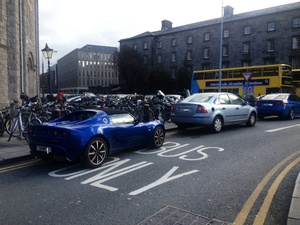
Outside Pearse Street Garda Station, Pearse Street, Dublin
Dan writes:
…Meanwhile 60 seconds down the road on Townsend st. I ran 5 mins over on my parking ticket and got fined and clamped….
Name that convertible anyone?
 [Garda whistleblower Sergeant Maurice McCabe arriving at the Public Accounts Committee hearing last week].
Whistleblowers meeting Garda recipients in cafes?
Garda recipients behaving like Iago.
We asked Legal Coffee Drinker, what’s it all about?
Broadsheet: Legal Coffee Drinker, what’s it all about?
Legal Coffee Drinker: “It’s about the procedure governing whistleblowing in the Garda Siochana, and in particular the role of the Confidential Informant. The statutory scheme governing whistleblowing is to be found in the Garda Síochána Confidential Reporting of Corruption or Malpractice Regulations 2007 (SI 168/2007), a statutory instrument enacted as a result of recommendations made by the Morris Tribunal in its report into garda corruption in Donegal. The Tribunal had found that fear on the part of ordinary members of the gardai that they would be treated badly if they complained was an important contributory factor to corruption and malpractice in the force. The Regulations were an attempt to do something about this”
Broadsheet: “And what do they do?”
LCD: “The Regulations provide that a member or civilian who has reasonable grounds for believing that a member of the Garda Síochána or civilian is engaged, has been engaged or is about to engage in corruption or malpractice may report in confidence to a Confidential Recipient any information that he or she has concerning the corruption or malpractice, disclosing any document, record or information in his or her possession or control which relates to the alleged corruption or malpractice.
The Confidential Recipient shall then transmit the report to the Commissioner who is under a statutory obligation to investigate the allegation or cause it to be investigated and take any action that is necessary as a result of the investigation – unless he has reason to believe that the allegation was not made in good faith or is false frivolous or vexatious.”
Broadsheet: “And the role of the Minister?”
LCD: “In circumstances where the report discloses malpractice or corruption on the part of the Commissioner, it must be transmitted directly to the Minister, who is under a similar obligation to cause it to be investigated.”
Broadsheet: “Can the complaint be made anonymously?”
LCD: “No. However the identity of the informant may be disclosed by the Confidential Recipient to the Minister or the Commissioner only if where essential for proper examination or investigation and all proper steps have been taken to advance the examination or investigation and the views of the informant on disclosure have been taken into account. In such case, the Minister/Commissioner must themselves keep the identity confidential and only disclose it to a member or civilian where essential for the investigation and such other persons cannot further disclose it without written authorisation of the Minister or Commissioner which again can only be given where essential for the investigation.”
Broadsheet: “What’s the relationship between the Confidential Informant and the Ombudsman?”
LCD: “The Garda Ombudsman deals with complaints by members of the public. The Confidential Informant deals with complaints by gardai or civilian employees. The Confidential Informant must notify reports to the Garda Ombudsman – but without disclosing the name of the informant.”
Broadsheet: “Is this all the regulations have to say?”
LCD: “Yes. They are a bit sparse to say the least. They do however provide for a Garda Charter fleshing out the procedures to be applied in more detail. In fact the passing of such a Charter is an essential prerequisite to the Regulations coming into existence. it apparently happened in 2007-8.”
Broadsheet: “Apparently?”
LCD: [refills coffee] “I haven’t been able to find a copy of the Charter online. But it seems that it was passed by July 9th 2008 because a question was submitted by Pat Rabbitte in the Dail on that date. The answer received from the then Minister confirms that the Charter was passed, but refuses to provide a copy, for the reason that the Charter is intended for the use of Garda members and civilian employees only. I did think of ringing the Office of the Confidential recipient for a copy – unfortunately the only place one can find details of the address/phone number of this office is apparently in the Charter itself.”
Broadsheet: “Gwan the Kafka!”
LCD: [Pause] “It is peculiar, and disappointing, that a system set up to increase transparency should itself be so oblique. Although it is correct that only Garda employees can make reports to the Confidential Informants, the public generally has an interest in knowing how the system of reporting operates. We are the people, at the end of the day, who suffer when corruption and malpractice this system is designed to prevent occurs.
Furthermore [drains cup] the Charter which we are not allowed to see is referenced in a law, passed by the Oireachtas, the coming into effect of which is conditional on the passing of the Charter. If a document is referenced in a statutory instrument, as conditional on the operation of that statue, surely it becomes part of our law by incorporation – and must be made available to the public. Failure to provide such access so is not only undemocratic – but risks unconstitutionality.”
Broadsheet: “And in English now?”
LCD:” It was in English. Are we done?
Broadsheet: “We are, thank you very much Legal Coffee Drinker. That was just a small joke about it not being English.”
LCD: “I know. Bye.”
Earlier: Garda Confidential
(Photocall ireland)
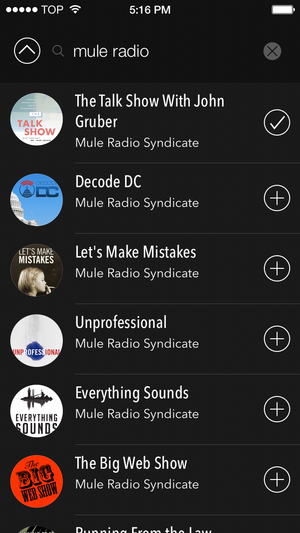

If you’ve ever clicked on one of the app redemption links we sometimes have for iOS apps, you may already encountered the developers of Castro – Vancouver based Pádraig Ó Cinnéide and Oisin Prendiville (who is also also behind My Artist, one of our first app reviews).
Like the best iOS apps of the moment, it fully leverages all the gestures and styling of iOS 7 to give an app that is quick and intuitive to use.
Under its skin it’s a smart little beast, downloading new episodes at optimum times (as all well behaved apps should) so new content is served up as soon as it’s ready.
A slick little package and to be honest, it gets more use from me than its rival Network.
FIGHT!
Castro is available on the App Store at €2.69
Do you have an Irish app (we’d really like to see some Android ones)? Broadsheet@broadsheet.ie
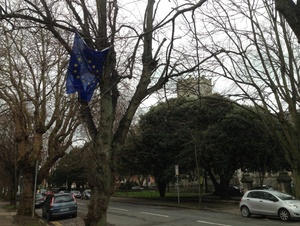
Elgin Road, Ballsbridge, Dublin
“Euro sceptics out , etc. but this has been bugging me for days. They would have needed a ladder! By the American Embassy…”


Dusan Cezek’s rather excellent pixel gifs of Hollywood characters.
And if you like these, you may also be partial to his comic book series Pixelomics.

[Government buildings this morning]
Anon writes;
“I need a hand with something. I went for an interview for a redeployment within public sector job and was told that my political affiliations (With the left) may be an issue as the person must be impartial when dealing with public servants etc. Is this legal? My HR dept doesn’t seem to know and I’m speaking to my union.
Anyone?
(Mark Stedman/Photocall Ireland)

From 1988, an ad for New Ireland Assurance.
Celtic mysticism was a thing back then.
Saying goodnight to an ancient statue.
That’s mad, Ted.


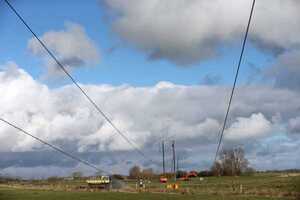
This afternoon.
Laura writes:
“Crews working for ESB Networks repair one of the main power lines in Co Limerick which feeds into Charleville, [North Cork] today. An estimated 8,000 homes and 10,000 businesses are still without power following the storms”.
ESB warns all services may not be restored until end of week (Irish Times)
(Laura Hutton/Photocall Ireland)