
Category Archives: Misc

Screen Shot 2016-01-14 at 11.22.03Screen Shot 2016-01-14 at 11.24.26

Screen Shot 2016-01-14 at 11.25.07

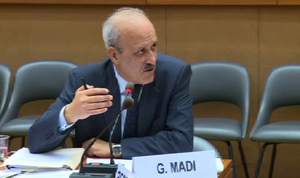
From top: Minister for Children and Youth Affairs Dr James Reilly; UN Committee on the Rights of the Child members Gehad Madi, of Egypt, and Suzanne Aho Assouma, of Togo

Today members of the UN Committee on the Rights of the Child are looking at Ireland’s record on children’s rights.

It’s been ten years since the committee last reviewed Ireland’s record.

This morning, Minister for Children and Youth Affairs Dr James Reilly spoke before the committee at the Palais des Nations in Geneva, Switzerland and fielded questions in relation to school patronage.

At one point, one of the committee’s members, Suzanne Aho Assouma, from Togo, interrupted to as if Ireland plans to decriminalise abortion.

It’s understood Dr Reilly, and members of the Department of Children and Youth Affairs, will reply to questions this afternoon when a second session gets under way at 2pm (Irish time).

From this morning’s session:

Dr James Reilly: “To reassure the committee, the Equal Status Act prohibit discrimination on nine grounds, namely gender, civil status, family status, sexual orientation, religion, age, race, membership of the Traveller community and disability. And the Employment Acts cover discrimination in the workplace and the Equal Status Act provides protection against discrimination in the provision of goods and services. And the legislation is designed to promote equality and prohibit discrimination in any form that it comes. So that applies in the general sense to both, to all people and also to Travellers and Roma.

In relation to the issue around patronage of the schools, I suppose it’s important to point out that our school system evolved from the religious orders themselves and so it’s not surprise that we have such a preponderance of denominational schools with 95 per cent of primary and 70 per cent of secondary schools of a denominational nature. But we are committed, as a Government, to move to a more pluralist system of patronage for our schools.

The report of the advisory group to the forum among patronage and pluralism in the primary sector, which was published in April 2012, recommended steps that could be taken to ensure that the education system can provide a sufficiently diverse number and range of primary schools to cater for all religions and none. And, as clear evidence that change is occurring, in relation to the ethos of newly provided schools to meet demographic need, since 2011 patronage and decisions have been made in respect of 45 new schools established to meet demographic need and all of these decisions have involved consultation with parents, as to the preferred type of school. Over 90 per cent of the new schools have a multi-denominational ethos.

So where demographic need does not exist the means of achieving pluralism in school choice is through a process of divestment of existing school patronage and this, I have to admit, is a slow process. But the Minister for Education has recently emphasised the importance of accelerating the process in that regard.

Can I just also say, I think it’s important, to point out that, we do have a much more pluralist society and a much more open society in Ireland. Now, there is one school I’m aware of in my own constituency where there’s 81 different nationalities attending that school.

So the issue is one of concern to us, that the patronage  of our schools is lagging way behind the actuality of our education system which is, you know, the separation of state and church is clearly well defined. And secondly, the minister has also indicated that she’s going to repeal part of an act that dates from 1965 which states that religious education  was the most important element of education in primary schools.”

Gehad Madi: “Thank you very much… The problem is implementation on the ground and we see that there is a big portion of people who would like to enrol their children in non-denominational education do not find the right school in their community, in their county, to do that.

And we understand, also, that religious education, I stand here to be corrected, is part of the curriculum of many schools. Is this the case? Because a student who does not participate in such lessons will have some problems in their grades or graduation. So I wanted to be clear on this issue, to help us better understand the information. And we do acknowledge that the process of transfer is being very slow. Thank you.”

Suzanne Aho Assouma: “Thank you. I haven’t yet had an answer concerning discrimination against boys because they’ve had sexual intercourse. I would like to also know what is being done to prevent stigmatisation of girls. Now on the abortion act, do you plan decriminalise abortion? And, in this regard, we believe that there is discrimination against pregnant girls who have to travel to another country in order to have an abortion. So we are asking why abortions cannot be carried out in Ireland? Is this for religious reasons? And I’d also like to know what happens to those girls who travel abroad to get an abortion? What happens if they haven’t got the necessary resources? What do they do in this case?”

Watch live (from 2pm) here

Meanwhile, back in Ireland…

Screen Shot 2016-01-14 at 11.02.39 Screen Shot 2016-01-14 at 11.02.50 Screen Shot 2016-01-14 at 11.03.24 Screen Shot 2016-01-14 at 11.03.41

Homeless charity You’re Not Alone distributing food and clothes to 214 people in Dublin city centre on Tuesday night

A volunteer from the charity writes:

“[Tuesday night] was one of the coldest nights – at 3°C – that we have been out so far this year. It was also one of the hardest nights to pack up to come home, knowing that someone could very well freeze to death on our streets. I hope to god all the hostels are operating to there fullest capacity.”

You’re Not Alone (Facebook)

Related: Whistleblower fought tooth and nail to reveal ‘under-reporting’ of homelessness issue (Irish Examiner, Michael Clifford)

Earlier: Are The Kids Alright?

Previously: G’wan The Volunteers

child_rights

This morning the UN will scrutinize Ireland’s record on children’s rights.

The hearing from Palais des Nations, Geneva, Switzerland will be broadcast live online here from 9am.

Poverty activist Michelle Russel writes:

Today the UN Committee on the Rights of the Child will review Ireland’s record on children’s rights. As they will sadly find, the state is dismally failing its children.

According to figures seen by the Irish Times in a report yet to be published, 1,638 children across Ireland were known to be homeless over Christmas 2015; a year in which the number of homeless families increased by 93%.

However, the actual number of families without a home is far greater than officially recorded, as this figure only reflects families who are not split up among relatives or couch-surfing with their children.

For those children who are not in a state of homelessness, 2015 saw 12% of children in Ireland living in consistent poverty, or 130,000; roughly similar to the entire population of county Mayo.
The poverty rate for children is higher than it is for adults, and in 2011, children were found to be 1.6 times more likely to be in consistent poverty than adults.  This is partly due to the number of cuts made to child benefit allowances between 2010 and 2014, and to the cuts made to social assistance payments and unemployment benefits which also affected the finances of dependant families.

One of the ways consistent poverty is measured is by lack of access to necessities such as two decent pairs of shoes and adequate nutrition, and such cuts directly contribute to an increase in child poverty.

Children in marginal communities fare even worse; there has been an 85% cut in spending on accommodation for travellers since 2008, and an 86% cut in traveller-specific education supports.

These cuts directly impact traveller children, who have an infant mortality rate 3.6 times higher than that of the general population.

According to the 2011 Census, 33% of traveller families had no sewage facilities that year, and 20% had no piped water source.

In a report on his visit to Ireland in 2008, Thomas Hammarberg, Council of Europe Commissioner for Human Rights, noted thatTravellers have been subjected to discrimination and racism in the fields of education, employment, housing, healthcare, media reporting and participation in decision making.

Things are not better for children in direct provision. In June 2015 there were 814 family units in direct provision, and 1082 children; 594 of those children were born into it.

The average length of time a person stays in direct provision is four years, but many families have been there for seven years or more.

Parents in Direct Provision are not provided with extra food when weaning a baby, or with any specialist foods for a child with particular medical or dietary needs. The weekly allowance is €15 per child and this often is not enough to cover school or medical supplies, or indeed any other special requirements a child may have.

Furthermore, the setup of Direct Provision makes it difficult for a child to integrate fully with children outside the system, as they are not allowed to have friends over to play and they don’t have the resources to partake in other activities such as school trips & birthday parties.

These and other failures to children in Ireland are the direct result of policies that amount to the decision to neglect, for which they are the least culpable.

The most disadvantaged children in our society are bearing the brunt of austerity policies that contravene the country’s commitment to the UN principle that “for the full and harmonious development of his or her personality… a child… should grow up in a family environment, in an atmosphere of happiness, love and understanding.”

These policies will affect these children long into their adult lives.

Michelle Russell is an activist and researcher with Dublin Central Housing Action and the Irish Housing Network.

Screen Shot 2016-01-13 at 17.48.26

Following a Patrick O’Leary sending a petition to the Joint Committee on Public Service Oversight and Petitions last month – to have Conor McGregor’s face placed on €1 coins – Sinn Féin TD Padraig MacLochlainn told the committee last evening it can’t happen.

Not least because he can’t get a hold of Mr O’Leary.

Mr MacLochlainn explained…

“‘Put Conor McGregor on the €1 coin’ – this [petition] is from a Mr Patrick O’Leary. We’ve deliberated on this petition and unfortunately because we haven’t been able to establish contact with the petitioner, our rules are clear, it has to be deemed inadmissible.

“So, what we have thought about this is that, we would advise the petitioner, or any other interested party, that they may wish to contact the Central Bank to establish the EU rules around both commemorative coins and the normal EU coinage which may have restrictions negating the proposal made in this petition so… while unfortunately we can’t deem it admissible, and take any further action on it, it is a matter of public interest around how decisions are made and who goes on coins…”

Petition to put Conor McGregor’s face on €1 coin deemed inadmissible (Newstalk)