Moon Looks On – Friends Keep Dropping

Dublin city at night.

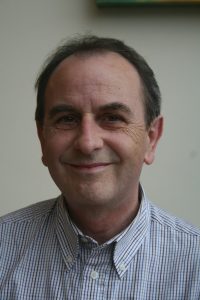
The new video by Moon Looks On – Sligo’s Stephen Gormley (top) and friends – captures the capital in all its nocturnal splendour.

Stephen is a graduate of the BIMM music school and has joined forces with fellow musicians Aisling Bridgeman, Jack Hussey, Jack Bird, Laura Ryder and Matilda O’Mahony for this project.

Having played at last year’s Glastonbury Festival, Moon Looks On release their debut album later this year.

Nick says: Making (lunar) waves.

Moon Looks On

This afternoon.

In Dublin.

Childcare workers and parents take part in a protest over pay and conditions in the sector.

Last week Minister for Children and Youth Affairs Katherine Zappone told providers that, following “legal advice”, they would lose State payments if they closed their centres in order to attend the protest.

However she reversed this decision following a public outcry.

Pics: Rollingnews June Shannon, 1916 Walking Tour and Gillian Brien PBP

Previously: And Your Little Dog Too

You Had The Power All Along

A rather beautiful depiction of the interconnected networks and cycles of a natural ecosystem, illustrated by Katie Scott, animated by James Paulley, and directed by Azuma Makoto.

colossal

From top: Fianna Fail’s Jack Chambers and Claire Byrne debate climate change on RTE One’s Claire Byrne Live last Monday; Eamonn Kelly

They say you can’t put an old head on young shoulders, but with Jack Chambers someone has succeeded.

The only problem is, it’s not a wise old head, it’s just an old Fianna Fáil head, probably found abandoned in a storeroom after some 1980s cabinet reshuffle.

Jack went to the Parochial Interrupters School of Communications where arguments are won, not by logic, but by creating noise so that nothing is heard.

In Jack’s book that’s called a win. But that tackle he’s sporting is now widely recognised as so last century. The time when shouting at people was regarded as debate is long gone.

Once Claire Byrne got Jack mildly pacified, the conversation turned to carbon tax, a brilliantly vague political football to be humping around the place like we’ve all the time in the world.

The obvious questions were artfully avoided. Like for instance, will the billionaires be paying their fair share, or will it just be retail workers and civil servants footing the bill. Will the multi-nationals be fined, or will it be just families fined for burning the bale of briquettes they were given at the fuel poverty store?

Going on prior form you’d have to suspect the latter, with maybe campaigns launched by local councils involving undercover carbon wardens empowered to impose on-the-spot fines on casual farters.

The real problem with carbon tax was nearly touched on during the Claire Byrne show, but somehow the opportunity slipped away when everyone got distracted again by Jack Chambers yelling incoherently and jabbing his index finger at someone and everyone, making some lost point in a last gasp attempt to drag Fianna Fail back to yelling supremacy.

The problem with carbon tax, especially a carbon tax levelled at ordinary people, is our old friend late-stage capitalism.

Here’s how it doesn’t work.

An extra tax means that people will have to earn more money, which will put more pressure on capitalism to deliver more growth and jobs, which will mean further damage to the climate as everyone expands their operations to increase profits to pay their carbon tax. It’s like a snake swallowing itself.

A carbon tax only makes sense if you heavily tax the hundred or so multi-national corporations who are creating the bulk of emissions. They’re eating up the natural world for private profit, so that they can amass enough wealth between them to build orbiting space stations for themselves when the great extinction comes. Personally, I’d rather go extinct than live in a space station looking at old movies about how Earth used to be.

A crazy stat came up from an audience member on the show. Our sparrow population has decreased by 80%. Sparrows. They used to be the most common bird. Did you miss them? I bet you miss them now.

No matter how you spin the climate change argument it seems to always come back to the same question: do governments have the strength to take on the multi-nationals who are causing the bulk of emissions, or do the multi-nationals own all the governments?

The Long Game

Throughout history there have always been big brains working quietly away on some long game that no one else can see.

For instance, back when it was discovered that the world was round, the big brains realised that if it was round it was finite, as were all its resources, and so the British big brains, by way of the East India Company, set out to find out where everything was, doing an inventory like the world was a larder.

When nukes came on stream some big brains realized that the winners of a nuclear war would be those who first established an infrastructure among the ruins. Maybe print a newsletter declaring victory. To this end they factored into their targeting, safe zones to land engineers after the war.

Big brains of today are likely devising long-game strategies for any old climate extinction that might come along. The key to success in this venture, as any kid who ever played Monopoly will know, is to get all the resources first. Then you’re in business.

Once the apocalypse begins you can build your space station, commandeer Hubble, peer into the void for some other possible habitable planets while your floating around eating your squishy astronaut food.

Then, when the dust settles on Earth and everything is as dead as Mars, you can maybe look at building one of those domes you see in science-fiction movies and away you go again, publishing a newsletter declaring victory. Sound like fun?

The key to escaping climate catastrophe may be in trying to convince the billionaires that letting the Earth die in the interests of private profits might not be such a great idea after all.

And that they might be better advised to use the resources they’ve been squirreling away to do something heroic for a change, like maybe save the Earth, like a bunch of latter-day Flash Gordons, instead of milking all around them until the old sow is dead.

Because when it comes right down to it, if only a hundred or so companies are responsible for the bulk of climate damage, and since these companies are generally authoritarian in nature, it follows that only a hundred or so individuals need to be sold the idea of saving the world.

The hard part, for them, since they are all capitalists, is that this proposition will involve sharing, implicating them in an unholy redistribution of wealth, the very thing they’ve been brought up to condemn with every fibre of their wallets.

But as capitalists are often fond of saying, you can’t make an omelette without breaking a few eggs. In this case, you can’t save a planet without breaking a few out-dated cherished prejudices about wealth re-distribution.

An early socialist once said, what shall it profit a man if he should gain the whole world and lose his soul? In this case, what will it profit him to gain the whole world only to watch it wither?

But who’s going to tackle the billionaires and sell them the idea of climate heroism? Not Jack Chambers.

Shouting at them probably won’t work. Who’s going to say, it’s time to really invest in the future, men, and start putting the sparrows back in the trees.

Eamonn Kelly is a freelance Writer and Playwright.

Previously: Eamonn Kelly on Broadsheet

Watch back in full here

Yesterday: Horror Of Chambers

This afternoon.

In Grove Park, Rathmines, Dublin 6.

Paul O’Donoghue tweetz:

Here’s inside one of Dublin’s new legal bedsits.

You can’t open the bathroom door without hitting the bed.

Smaller than a disabled car park space. For €1,300 a month.

Inside the renovated Dublin bedsits making investors a fortune (Paul Donoghue, The Times Ireland edition)

Today’s Irish Times

In today’s Irish Times.

A full-page ad for Fine Gael sits on page five of the newspaper, alongside the newspaper’s general election coverage.

Meanwhile…

Speaking of placement…

Sigh.

Election 2020 outtakes: SF candidate takes a break from it all (Mark Hilliard, The Irish Times)

Clockwise from top left: Alison OConnor, Fionnan Sheahan, Sinn Féin leader Mary Lou McDonald and RTÉ’s Seán O’Rourke;

This morning.

On RTÉ Radio One’s Today with Seán O’Rourke.

Ireland editor of the Irish Independent Fionnan Sheahan, Irish Examiner columnist Alison O’Connor and RTÉ’s Niamh Lyons joined Mr O’Rourke to discuss last night’s leaders’ debate on RTÉ’s Prime Time.

The panel discussion followed Mr O’Rourke interviewing Breege Quinn about the murder of her 21-year-old son Paul Quinn in Monaghan in 2007, following comments made by Sinn Féin leader Mary Lou McDonald during last night’s debate.

During the interview with Ms Quinn, she said Sinn Féin’s Minister for Finance in the North Conor Murphy should resign or be stood down as minister.

Following this, Mr O’Rourke asked the panelists how the matter might effect the election “in the last three crucial days”.

Alison O’Connor: “Well I suppose, Seán. First of all, I mean, that Breege Quinn, I mean, what, I found myself really moved by her interview and almost close to tears at times. What she’s been through, her immense dignity and even where she said, at the end, two wrongs not making a right.

“There are a lot of people as we know who want to vote Sinn Féin in this election. People who would not have considered it before and it’s for understandable reasons because they say want change and they’re not expecting to get that change from Fianna Fáil and Fine Gael.

“But I think that, in a funny sort of a way, it’s this blowing up at this time is not a bad thing. Because this is part and parcel of Sinn Féin’s history and their past and that we see this playing out. People will be able to make, I believe, a fully informed choice.

“And in a way, it gets to the heart, I mean this is something that happened 13 years ago. And Mary Lou McDonald is implying, saying, whatever, that in that space of time and even in more recent times, I mean, it has come up, Mrs Quinn was on [RTÉ’s] Drivetime the other day as well, that she didn’t have either then, now or in the last couple of years a full conversation with Conor Murphy, a very senior member of her party, to see where exactly things stand.

“Either a) that just doesn’t have credibility or b) shockingly, it’s very far down the list of the party’s priorities. And I would also say, as someone who observes, has been observing politics for a long time, this is the bit that fascinates me. If Sinn Féin are in Government, in a coalition arrangement, and we’ll say that was actually an interview on Prime Time last night, and Mary Lou McDonald was a minister and she was asked that question by Miriam O’Callaghan and gave that unsatisfactory an answer, how that plays, how we’ll say the Fianna Fáil or Fine Gael side of the house would cope would that. And the fall-out from that sort of thing.

“And my final point as well then is, just watching it as a viewer last night, I thought Miriam O’Callaghan did magnificently with the questioning. Why didn’t Leo Varadkar and Micheál Martin, I thought, in terms of, just purely point scoring which it seems wrong to bring that level of it to this conversation, did not pile in, did not ask any questions?”

O’Rourke: “Well, perhaps because they felt dignity required and also the political reality, nothing needed to be said. Fionnan Sheahan, I suppose when it came to other aspects of law and order and the ugly side of our relatively recent history, the question of the Special Criminal Court was one that Mary Lou McDonald struggled on as well?”

Fionnan Sheahan: “Yeah you’re colleague Bryan Dobson has a three-question rule. He says on TV, when you ask somebody a question three times and they haven’t answered it, the viewer at home can quite clearly see ‘well, they’re not answering the question’. Miriam O’Callaghan went further, she asked the question four times and Mary Lou McDonald failed to answer that question about the Special Criminal Court.

“Sinn Féin’s position now is that they say they want to review the Special Criminal Court. They have opposed the Offences Against The State Act every time it has come up in the Dáil over the past generation which implies that they are opposed to the Special Criminal Court. So Mary Lou McDonald could not come out with a straight-forward [inaudible] last night, saying ‘I’m in favour of the Special Criminal Court’ which not only affects prosecutions of alleged members of a terrorist organisation but also is a key element of combatting gangland crime.

“So I mean, in effect, you are seeing in a situation like the murder of Paul Quinn, north of the border. However there are situations where is nigh impossible to get witnesses into the witness box and that’s why we…”

O’Rourke: “I suppose looking at this, Niamh Lyons, like all political change, sorry, like a lot of political change, it has to be done crab-like. That’s how they got to the ceasefire over a quarter of a century ago and it was interesting looking at Eoin Ó Broin on the Virgin Media analysis, the post-match analysis, he was saying, just by way of clarification on that, Sinn Féin, yes they want a review of the courts and they want it done by a senior judicial figure and they will accept the outcome. So if that recommendation is the Special Criminal Court stays, they’re happy for it to say.”

Niamh Lyons: “Yeah and there has been criticism of the Special Criminal Court by the likes of the Irish Council for Civil Liberties,  Amnesty International. I think the issue here, for Mary Lou McDonald, is that she wanted to be front and centre in that debate last night. She put herself up there, playing the senior hurling but she wasn’t at the match at all.

“And this is where I suppose the rubber hits the road for her candidacy. You know, when you hear her, that accusation that, you know, who runs Sinn Féin? On that issue and the Special Criminal Court and on the issue of Paul Quinn, she’s unable to pivot in her own position and if you go on the Sinn Féin website, you’ll see a picture of Mary Lou, you’ll see Pearse Doherty, Michelle O’Neill and Conor Murphy.

“He’s one of the top four people in the party. He’s their lead negotiator. So why is she not allowed pivot away from something that he has previously said. You know, why is she so on the backfoot on this issue. Why does she sit down in front of Bryan Dobson, not knowing that not only had Conor Murphy made those claims but Gerry Adams in the past has made those claims. Why did she not check it out? Is she following a particular line?”

O’Connor: “I mean that’s the heart of it. This is a woman at the peak of her…this is a woman at the peak of her political powers right…”

Talk over each other

O’Rourke: ‘But is there a light-touch relationship with the truth? You know, I mean she, in this studio, sitting where Fionnan is sitting, she said she believed Gerry Adams when he said he wasn’t a member of the IRA.”

O’Connor: “Actually Seán, I’m trying to…she didn’t quite say that. She said something like ‘you accept’…because I remember hearing that interview, I’m trying to remember her wording now, it was a very particular wording and…of course the criminal court was going to come up. I’ve heard her address it previously in the campaign. Of course the Quinn story was going to come up. So I find it very interesting, I didn’t see Eoin Ó Broin last night.

“So Eoin Ó Broin, who’s of lesser standing, if you like, than the leader is able to say that Sinn Féin would accept the outcome of a review into the Special Criminal Court. So it gets back to the heart of that issue, where we wonder, who pulls the strings on these sorts of issues, the whole, as Micheál Martin calls it, the old provos issue and why Mary Lou McDonald doesn’t appear to have the absolute autonomy as party leader on these issues.”

O’Rourke: “Let’s move to another…”

Sheahan: “The issue I suppose is that: do people care?

O’Rourke: “Well…”

Talk over each other

O’Connor: “Yeah, that’s an interesting…”

Sheahan: “The calculation Sinn Féin will make now is ‘well, you know, how many people are going to know who Paul Quinn was and how it was that he died and how many people, the man on the street, is going to know who Conor Murphy is? And that’s all stuff north of the border’…”

O’Rourke: “Yes, and there are atrocities on all sides…”

Sheahan: “Yeah.”

O’Rourke: “And if you go back long enough into the history of all the parties, very bad things happened. Now let’s move to another aspect of this debate…”

Listen back in full here

Earlier: How Was It For You?

 

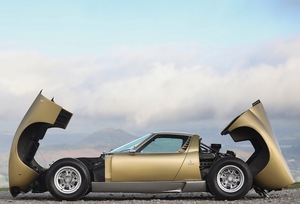
Behold: the 1971 Lamborghini Miura P400 SV Speciale – the world’s first mid engined supercar, it debuted in 1966 and put Lamborghini up there with Ferrari. Of 764 built, only 150 were SVs – the ultimate iteration of the Miura with a 385bhp 4-litre V12.

This numbers-matching, fully documented car, which only ever had two owners, is presented in its original Oro Metallizzato paintwork after a Concours restoration.

Possibly the best surviving example of its type and yours for around €2,360,000.

uncrate

Broadsheet.ie