

A very pleasing performance on the sansula – a modern version of the traditional African mbira – by percussionist Conny Sommer.



A very pleasing performance on the sansula – a modern version of the traditional African mbira – by percussionist Conny Sommer.

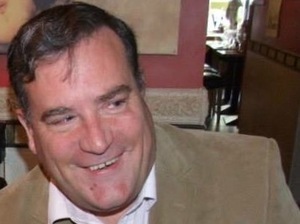
From top: Student accommodation hoarding in Thomas Street, Dublin; Dan Boyle
Last weekend I spent a night in on campus student accommodation at Dublin City University. It was basic but comfortable and near where I needed to be.
DCU management seem to work their asset well, an asset I now presume has since fully reverted to use as student accommodation.
I cite my experience because I believe this is something we need to have a conversation about.
Student housing is a land use issue, not a housing issue.
There is no formal policy in local development plans for student housing.
On average the cost per month of a room in a student housing complex is the same per month as a 2007 tracker mortgage for 90% of a 320k mortgage (for a room in shared apartment complex).
The argument that student housing frees up much needed housing stock is spurious and unsupported. Evidence exists that seems to show that the opposite seems to be the case.
Student housing built on serviced and well connected land in city centres displaces residential accommodation elsewhere.
Because of the rents attainable cash investors are now more inclined to buy houses in residential areas then gearing them for student, rather than residential, use.
This is turn is causing serious local planning issues with most of these conversions being carried out without proper applications for change of use
The supposed ‘freed up housing’ is often older stock that has been poorly maintained and is in need of major renovation. These levels of cost and investment put them well beyond the normal first time buyer.
The approach to student accommodation at each third level college differs wildly resulting in differing affects.
Colleges that build on campus and/or through outreach seek to best co-operate with nearby community, seem to achieve a better sense of cohesion.
Those that project off campus, with privately constructed and managed facilities, invite a distance in community response that can often encourage hostility from the existing community.
What then are the effects of Student housing? It is short term let accommodation in principle.
Anecdotally there is evidence that suggests that it dilutes and divides local communities into which they are placed.
In Cork, as I suspect in it is with other colleges, current proposals were originally mooted as apartment or residential development sites with a mixed use aspect.
There is no social and affordable housing aspect to any of the developments. In terms of adaptability the only likely alternative use for this housing are co-living centres or as hotels. They will never be suitable for housing families.
Student accommodation should no longer be given strategic planning exemptions, simply because they create more problems than they solve.
Where a more permissive approach can be taken is in developing residences on campus. Even with this no student residences should be developed on infrastructured land that is not adaptable for long term residential use.
There should be a social and affordable element to student housing.
These residences should be taxed accordingly for use as short term lets during summer months, and be required to have stand alone planning permission for that purpose.
The Dutch approach of matching students with older single occupiers, would carry far greater social benefits at a far lower cash outlay.
Instead we see a total overdevelopment of student accommodation far in excess of more needed other types of housing development.
This is being subsidy led. It is an area where developers see that profits can be quickly and easily got. Remove the subsidy and that will soon change.
Building activity, such as with student accommodation, does not a housing crisis solve. In truth it has helped make that crisis worse.
It is something of a tasteless irony that in catering for those whose minds we try to strengthen, we seem to be doing so in the most stupid way possible.
Dan Boyle is a former Green Party TD and Senator and serves as a Green Party councillor on Cork City Council. His column appears here every Thursday. Follow Dan on Twitter: @sendboyle
Top pic: Rollingnews


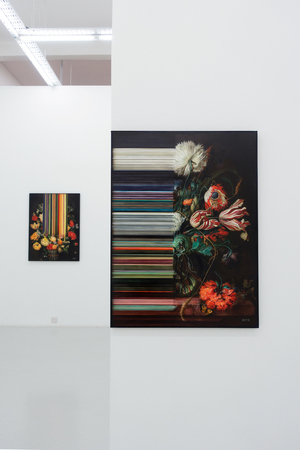
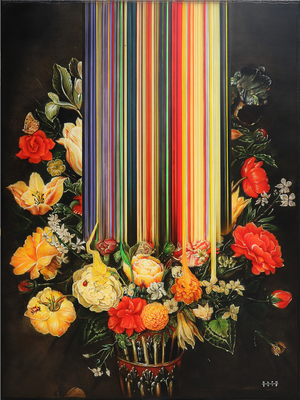


Lavish acrylic paintings by Filipino artist Olan Ventura in the style of 17th century Dutch still life, from which elements veer off the canvas and into abstraction.
More of his work here.

This morning.
The Little Coffee Shop, Florence Road, Bray, County Wicklow.
See? Not all doom and gloom.

UK prime Minister Boris Johnson addresses the House of Commons yesterday as MPs debated Brexit
For Boris, I’m sorry to tell
Nothing is working out well
As many MPs
Think it’s a great wheeze
To tell the PM “Go to Hell.”
John Moynes
Pic: Getty


MORE to folly


A very cute award-winning short by Tsuneo Goda about a Bigfoot, a small raccoon, a bountiful island and the transformative power of food.


Bookshelf stacker-turned-author Vivienne Kearns (left) with publisher Paula Campbell of Poolbeg Press
Last night.
Hodges Figgis, Dawson Street, Dublin 2.
The launch of The Emerald Dress by Vivienne Kearns – Set in modern day Dublin and the city in Swift’s time mixing “fashion, mystery, feminism and romance”.
Peter O’Connell writes:
It was a particularly fitting venue for Kearns, who told the packed launch: ‘I never thought when I worked at Hodges Figgis twenty years ago that I would one day be launching my novel at the store’
In fairness.
The Emerald Dress by Vivienne Kearns – read an extract (RTÉ)
Pics: Frank Courtney
Meanwhile, in non-fiction…
Vera Twomey’s book Number 3 on the Non-Fiction Chart in Dublin Airport 👍🏼@veras1 @broadsheet_ie pic.twitter.com/asOjWfO2kX
— fweed (@Fweed_) September 4, 2019
G’wan the Vera.


Behold: the Holmsland Dune House, designed by Studio Viktor Sørless: perched on an isolated stretch of the Danish coast: an elevated, formed concrete cruciform, each wing of which points in one of the four cardinal directions.
Inspired by the 2010 Roman Polanski film ‘The Ghost Writer’, the combined effect of the changing light and the building’s extensive glazing is designed to create cinematic panoramas of the windswept coast as requested by the owner, an “absolute cineaste”.
