


Before and after the question: ‘Oo’s a good boy, den?’



Paving at four locations in Cork city centre were dug up over the weekend.
If you’re walking through Cork you may meet
A mysterious scene on the street
As someone’s spent hours
Making holes filled with flowers
An impressive and surrealist feat
John Moynes
Pic: Cork City Council
Yesterday: Hulk Smash


MORE to follow

It’s all fun and games until you have an underlying health condition 😱 pic.twitter.com/JNw6n73kVA
— On The Rivet (@kilduffs) April 12, 2020
Yesterday.
Rathkeale, County Limerick.
That’ll learn him for being outside his own house.
Earlier: Seven Times


Ah here.
This afternoon in Cork city.
Cork City Council tweetz:
“Cork City Council has reported criminal damage to the gardai after paving at four different locations in the city centre were dug up over the weekend. An investigation is underway.
“In some instances, cut flowers and greenery were placed in the dug out sections.”
Anyone?

‘Sup.
This afternoon.
Unnamed canines somewhere in Cork.
PJ Coogan tweetz:
Ruff oul’ work, lazin’ in the sun, jus’ bein’
Mmf.
Meanwhile…

‘sup?
This afternoon.
Outside Dublin Airport.
Pfft.
Here at BS Towers, it’s a combination of 8-track and Aertel.
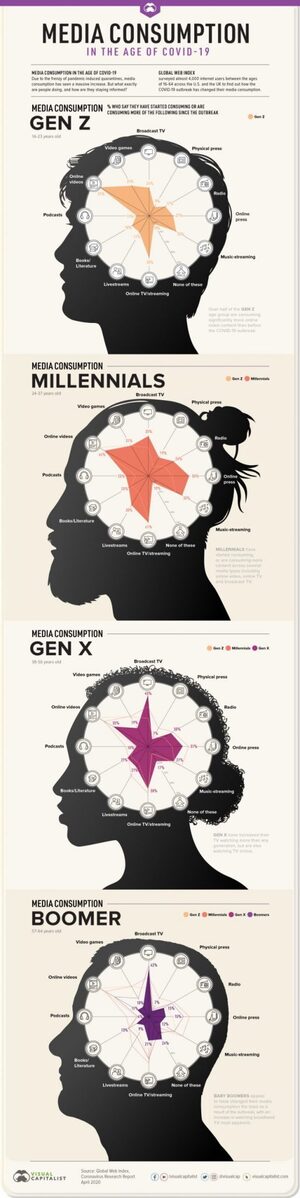
How COVID-19 Has Impacted Media Consumption, by Generation (Visual Capitalist)

This afternoon.
Rathcoole, County Dublin
Stephen Stewart writes:
Lots of painted random rocks around.
Anyone?
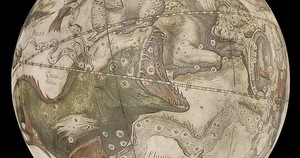

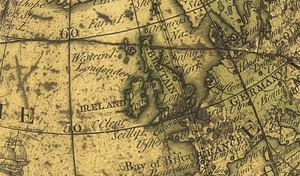
The British Museum has digitised many of its 17th and 18th century globes into spinnable zoomable 3D models for your perusal. To wit:
During the so-called ‘Age of Exploration’, expanding European geographical and astronomical knowledge fuelled the demand for maps and sea charts. It also inspired experimentation in the art of globe-making, and the first half of the 16th century saw the production of several models, both hand-painted and printed. Printing made it possible to produce globes in greater numbers at lower cost so they could be more widely distributed. The printed globe, terrestrial and celestial, soon became established as the standard type of globe, sometimes called the ‘common’ globe, and the methods of manufacture changed surprisingly little from the mid-16th century until the 20th century.
Explore them here.
