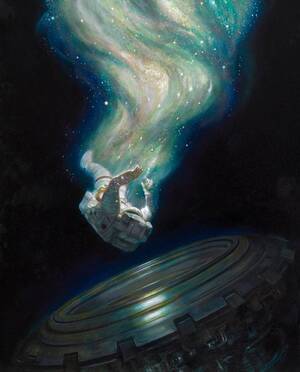
A revealing short from YouTube smartypants CGP Grey.
The answer is ‘no’ because elliptical orbits, you see.
Then again, what question were you asking?



A revealing short from YouTube smartypants CGP Grey.
The answer is ‘no’ because elliptical orbits, you see.
Then again, what question were you asking?

Gavan Reilly tweetz:
I guess the Botanic Gardens are becoming the Boo-tanic G-arrrrrgh!-dens today.
Sorry.
Meanwhile…

Helen O’Rahilly tweetz:
The Halloween ‘5 saucer’ game was a terryfying part of my 70s Irish childhood – the wedding ring, the soil, the cloth, the water, the coin. Modern version? – A pile of Pyrite, a Tracker mortgage cert, Jobpath entry form, Dublin rental agreement, Iona Institute membership. Scary!
Anyone?


Twitter logo, Twitter CEO Jack Dorsey
We’ve made the decision to stop all political advertising on Twitter globally. We believe political message reach should be earned, not bought. Why? A few reasons…
A political message earns reach when people decide to follow an account or retweet. Paying for reach removes that decision, forcing highly optimized and targeted political messages on people. We believe this decision should not be compromised by money.
While internet advertising is incredibly powerful and very effective for commercial advertisers, that power brings significant risks to politics, where it can be used to influence votes to affect the lives of millions.
Internet political ads present entirely new challenges to civic discourse: machine learning-based optimization of messaging and micro-targeting, unchecked misleading information, and deep fakes. All at increasing velocity, sophistication, and overwhelming scale.
These challenges will affect ALL internet communication, not just political ads. Best to focus our efforts on the root problems, without the additional burden and complexity taking money brings. Trying to fix both means fixing neither well, and harms our credibility.
For instance, it‘s not credible for us to say: “We’re working hard to stop people from gaming our systems to spread misleading info, buuut if someone pays us to target and force people to see their political ad…well…they can say whatever they want! 😉”
We considered stopping only candidate ads, but issue ads present a way to circumvent. Additionally, it isn’t fair for everyone but candidates to buy ads for issues they want to push. So we’re stopping these too.
We’re well aware we‘re a small part of a much larger political advertising ecosystem.
Some might argue our actions today could favor incumbents. But we have witnessed many social movements reach massive scale without any political advertising. I trust this will only grow.
In addition, we need more forward-looking political ad regulation (very difficult to do).
Ad transparency requirements are progress, but not enough. The internet provides entirely new capabilities, and regulators need to think past the present day to ensure a level playing field.
We’ll share the final policy by 11/15, including a few exceptions (ads in support of voter registration will still be allowed, for instance).
We’ll start enforcing our new policy on 11/22 to provide current advertisers a notice period before this change goes into effect.
A final note. This isn’t about free expression. This is about paying for reach.
And paying to increase the reach of political speech has significant ramifications that today’s democratic infrastructure may not be prepared to handle. It’s worth stepping back in order to address.
Twitter CEO Jack Dorsey explaining, in a series of tweets last night, the company’s decision to ban all political advertising on Twitter, staring on November 22, 2019.
Twitter to ban all political advertising (BBC)
Previously: What Do You Get The Man Who Has Everything?
#Twitter Founder Does Not Think Ireland Sucks
Pic: Bloomberg

Tandem Felix – Oil Money
If you are partial to smart indie bands that breathe the same air as Beck and Pavement, then you will want to hear the new single by Tandem Felix.
The Dublin hopefuls’ current line-up comprises David Tapley (top, vocals, guitar), Conor Muldowney (guitar), Evan Keogh (bass), Ena Brennan (violin) and Neil Dexter (drums).
The band name comes from the Latin epitaph on scientist Marie Ampère’s gravestone, which translates as “happy at last”.
Spot the Trinity student!
The smart-as-you-like video was directed by Ror Conaty.
You can catch them live next month.
Nick says: That petrol devotion.

Independent TD Michael Healy-Rae
This morning.
RTÉ Investigates analysed official attendance records published by the Oireachtas, together with TD voting records, to find instances where TDs signed in electronically and then failed to attend any votes.
To wit:

Those who most frequently missed every vote on days when they clocked in include Independents Michael Healy-Rae, Danny Healy-Rae, as well as Fine Gael’s Enda Kenny, Independent TD Noel Grealish, and Fianna Fáil leader Micheál Martin and his party colleague Willie O’Dea.
RTÉ Investigates found that between March 2016 and the end of July 2019, Michael Healy-Rae recorded his attendance in Leinster House for 76 days on which he missed the entire day’s votes.
In that period, there were 155 days when he signed in and a vote took place- meaning he missed 49% of the voting days for which he was recorded as present at Leinster House.
Michael Healy-Rae told RTÉ Investigates that he sometimes had meetings when votes took place. He also said that, on occasion, he would be asked to ‘pair’ – an arrangement whereby two opposing TDs agree not to vote, which generally occurs when one or both of the TDs have other commitments and can’t attend.

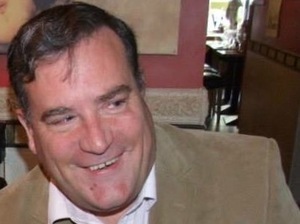
From top: UK Prime Minister Boris Johnson (left) and Labour Party leader Jeremy Corbyn: Dan Boyle
Having painfully discovered that asking a binary question does not, of itself, extricate a country from forty plus years of international treaty commitments, our friends across the water (and up North) are now facing a fourth general election in nine years.
In a bitterly divided country, reliance will now be put on one of least democratic voting systems in the World, where victory can be claimed with only one third of the vote.
The value of the votes that get cast in an UK election are but one thing. How votes are informed is a far more important aspect altogether.
Britain possesses one of the most pernicious ‘free’ media in the democratic World, one that isn’t countered in the slightest by public broadcasters there.
It is a media goverened almost entirely by proprietoral interests. No exaggeration is ignored in pursuit of these interests.
A bought and sold for media has managed to convince many in Britain that they are the victims of others, the EU and assorted other foreigners, rather than the destiny makers of those elite and established British privilege holders whose look over there politics has helped them hold sway for far too long.
More than likely this established Brexit narrative will take hold in this election. Boris Johnson and the Tories seem on course to achieve a majority in the next House of Commons.
Whether this majority will be used to quickly process the currently agreed deal with the European Union, or instead pull another rug then steam towards a No Deal Brexit designed to create the dream of Singapore on the Thames, we will yet find out.
The Tory majority, if it comes, may not be that substantial. The party will lose seats in the south of England to the Liberal Democrats. In Scotland to the Scottish Nationalists.
The key to the election will be in how many seats the Tories can win from Labour in Leave voting constituencies in the English Midlands, or in the North of England. A North of England that previously was forbidden territory for the Tories.
Once again Jeremy Corbyn will be the key figure in the election. He is neither the Maoist terror figure he is often portrayed by the Murdoch led press, or the hapless fool is sometimes seen as, at times even by his own party colleagues.
He has though been the author of his own difficulties. His ambivalence, in leading a Europhile party against his long standing opposition to the EU project, was one of the biggest contributory factor in bringing about a Brexit yes vote in 2016.
If a policy led narrative takes hold in this election, then Corbyn could yet make the recovery he made in 2017.
But he will be up against a far better opponent than Theresa May. Johnson maybe incorrigible and more corrupt, but he is a substantially better campaigner.
Victory for Corbyn in this campaign would be to stop a Johnson majority. In this he could be helped by Nigel Farage and the Brexit Party, whose search for a perfect Brexit may siphon off key Tory votes.
Up North a Remain alliance could see DUP come back with less MPs. Wouldn’t that be nice?
Dan Boyle is a former Green Party TD and Senator and serves as a Green Party councillor on Cork City Council. His column appears here every Thursday. Follow Dan on Twitter: @sendboyle

A city council has asked the New Zealand Transport Agency to eliminate horn blowing in the Mount Victoria Tunnel
In New Zealand police have to warn
Against drivers who blare on their horn
While they drive underground
As it seems that the sound
Is something that cannot be borne
John Moynes
Pic: Googlemaps


MORE to follow.