This evening.

New Department of Housing figures show there were 6,024 adults, 1,778 families and 3,867 children staying in emergency accommodation in July.

This means there’s been a decrease of 24 adults but an increase of 24 families and 43 children since June – when there were 6,048 adults, 1,754 families and 3,824 children in emergency accommodation.

Via Department of Housing

Yesterday: ‘Hitting 10,000 Doesn’t Tell Us Anything That Hitting 9,000 Didn’t Tell Us’

The former ‘Gloucester Street’ Magdalene Laundry, Sean McDermott Street, Dublin 1

Social Democrats Dublin City Councillor Gary Gannon, for Dublin’s North Inner City, has set up a petition calling on Dublin City Council to stop the sale of the Sean McDermott Street Magdalene Laundry site to a Japanese hotel chain.

He writes:

Dublin City Council is planning to sell the 2-acre Magdalene Laundry site on Sean McDermott Street in Dublin to a Japanese hotel chain for €14 million.

The elected Dublin City Councillors have the power to stop the sale. They will vote on a motion to stop the Council’s plan on Monday 3rd September.

Sign the petition here

Previously: The Last Laundry

A short by Paul Cabon in which, at dinner with his father and uncles, a lushly coiffed young man begins to suspect the destiny that lies in store for him.  To wit:

Être chauve ça craint, savoir qu’on va le devenir c’est pire.

But are things really so grim?

shortoftheweek

This afternoon.

At 34, Frederick Street North, Dublin 1, which has been occupied by housing activists for 11 days.

Crowds gather in support of the activists after the High Court yesterday ordered those in the house to leave it by 2pm today.

Group occupying Dublin property ordered to leave by judge (The Irish Times)

Yesterday: ‘Hitting 10,000 Doesn’t Tell Us Anything That Hitting 9,000 Didn’t Tell Us’

Previously: A Modest Vacant Housing Proposal

Pics: Ronan Lowther and Dublin Central Housing Action and Timbo and Rollingnews

Former head of the Workplace Relations Commission Kieran Mulvey

Independent News and Media PLC announces that Mr. Kieran Mulvey has been appointed as a non-executive director of the company with effect from today.

Mr Mulvey has been nominated to the board by Mr Denis O’Brien, the company’s largest shareholder and, accordingly, the board has determined that Mr Mulvey should not be considered to be independent on application of the independence criteria set by the UK Corporate Governance Code.

INM is currently actively engaged in securing a further candidate for appointment to the board to restore compliance with the board constituent provisions of the code. The company hopes to make a further announcement in this regard in the coming months.

From a statement released by Independent News and Media this afternoon.

Meanwhile…

On August 5 last.

Mark Tighe, in The Sunday Times, reported:

A row has blown up between Independent News & Media (INM) and Denis O’Brien, the publisher’s largest shareholder, over the composition and size of the company board.

O’Brien, who owns 29.9% of INM through his holding company Baycliffe, wrote to the publisher on June 12 to say he wanted to nominate Kieran Mulvey, a former head of the Labour Relations Commission (now the Workplace Relations Commission) to its board.

Baycliffe has since complained that Mulvey has been “messed around” by delays in the appointing him.

INM insists that any new O’Brien appointment must be “paired” with a new independent director so as not to affect the current balance on the company’s board. It has also expressed concern about INM’s board becoming too large.

INM and O’Brien in board nominee dispute (Mark Tighe, The Sunday Times, August 5, 2018)

Read the statement in full here

Rollingnews

“Young girls and women can struggle to pay for monthly sanitary products, this significantly affects their hygiene, health and overall wellbeing.

In fact, stark figures released by Plan Ireland earlier this summer reveal that almost 50% of teenage girls in Ireland struggle to afford monthly sanitary products.

It’s not unheard of that young women may have no choice but to go without sanitary products to make ends meet.

Indeed, some household’s weekly budget cannot stretch far enough to afford the cost of these products; they are luxuries not certainty’s for too many.”

Senator Lorraine Clifford-Lea, of Fianna Fail, suggesting the implementation of a national programme to improve access to sanitary products and promote menstrual hygiene,

Senator Lorraine Clifford-Lea

Vanessa writes:

Finally…

From top: Minister for Culture, Heritage and the Gaeltacht Josepha Madigan, who has called for regulation of social media; Bryan Wall

When we think of citizenship and democracy we tend to think of two interrelated aspects of human existence without which we would be at the mercy of the wider world.

The broad environment and other people would be construed as threats to our being. What citizenship and democracy purportedly offer us is a form of protection against those who would do us harm.

It also offers us a method of deciding, as equitably as possible, how society should function; what institutions to construct and uphold, what rights are to be formulated and supported, where the state ends and the nation begins, and, probably most importantly, who is to count in all of this.

The above is what we have been taught about citizenship and democracy. Reality, obviously, is more complicated.

Citizenship and democracy have never been as cut and dry as we have been led to believe. A hierarchy inherent in both has always existed.

When politicians and elites lament the crumbling, crisis, or destruction of democracy they often mean something other than what appears to be the case.

It usually means that citizens have taken it upon themselves to decide what it means to be a citizen and that no longer should they be constrained by artificial limits placed upon them by their predecessors in government and by their current leaders.

Those in power fear this and always have.

When the United States was in the process of being founded these fears motivated the Founding Fathers. During the debates of the constitutional convention in 1787 the delegates took it upon themselves to ensure that the common people would have their rights curtailed.

It was insisted upon that the “people are turbulent and changing; they seldom judge or determine right.” Therefore, the “rich and wellborn” were to be given a permanent share in government in order to keep the masses in check.

The new government, it was argued, was to be constructed in order “to protect the minority of the opulent against the majority.”

The majority, who had just won the Revolutionary War for those now debating the merits of democracy, and finding it lacking, were to become lesser citizens compared to the landed gentry.

James Madison put this explicitly, stating that “The states ought to be placed under the control of the general government — at least as much so as they formerly were under the king and British parliament”, in order to ensure a return to the previous oligarchic state of affairs and to protect the agricultural, financial, and land interests of the new ruling elite.

This is nothing remotely new in the history of revolutions and democracy. It was seen in the French Revolution and also here in Ireland. In both cases, after a successful revolution by the masses, their new leaders secured their new-found power by fortifying it behind new constitutional powers or ensuring that their patrons were protected and had unbridled dominance in the new state.

In Ireland the latter was especially the case when we see how the Catholic Church was effectively given free rein over the new state.

Political leaders and elites are more than happy to live with a state of affairs such as this. A form of citizenship and democracy that is highly constrained and differentiated along economic, racial, religious, or other lines, is perfectly acceptable to them.

Continue reading →

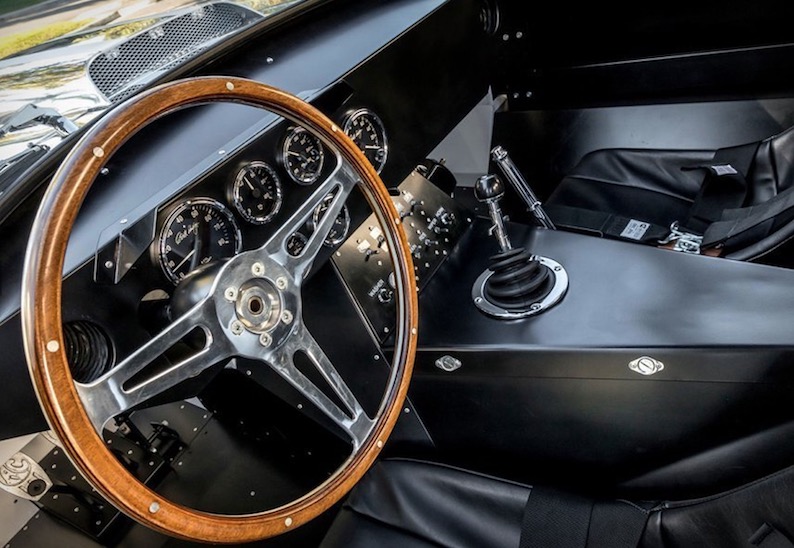
Behold: the Shelby Daytona Coupe Secret Weapon – a ‘continuation’ of the Shelby Daytona Cobra Coupe, only six of which were ever built.

Based on a modified 289 Cobra chassis and streamlined to the point where it would achieve a top speed of 305km/h (190mph), the Cobra beat the otherwise all-conquering Ferrari 250GTO at Le Mans in 1964.

The ancestor of this 7-litre V8 variant (of which only one was made) was the ‘secret weapon’ of the 1964 Le Mans team but was damaged en route to the course and never actually raced.

Yours for around €423,000.

uncrate

‘sup?

This afternoon.

Dublin Castle.

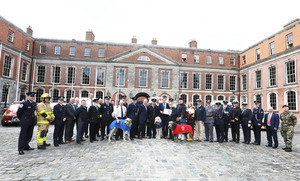
Minister for Health Simon Harris with white-haired Darcy, from the Ambulance Service, and love-lorn Seodin, from  the Dublin Fire Brigade, during the launch of the  ‘National Day to Celebrate Ireland’s Unsung Heroes’ a new national day to recognise frontline and emergency services workers.

Leah Farrell/RollingNews

Meanwhile..

A group shot with Simon Harris and members of the Emergency Services

Leah Farrell/RollingNews.ie

Broadsheet.ie