From top Daragh O’Brien of technology and data governance firm Castlebridge; Covid-19 tracing app in Singapore

Yesterday.

Susan Mitchell and Aaron Rogan, in The Business Post, reported that members of the public will be asked to “opt into” a mobile phone tracking and tracing app by the HSE as part of its strategy against Covid-19.

The HSE has already been in contact with the Office of the Data Protection Commissioner about the app.

They reported:

The track and trace technology that the HSE plans to introduce will be facilitated by an opt-in mobile phone app that will allow people to be notified if they were in close proximity to confirmed cases.

Similar apps have been used in Singapore and South Korea, which have been held up as exemplars of how to successfully battle the coronavirus pandemic.

The apps help with contact tracing, which is the process of identifying those who have had close contact with infected individuals. Without technology, these efforts rely on the recall and memory of infected individuals.

Under plans being advanced by the HSE, phones with the app installed would exchange short-distance Bluetooth signals where users are near each other. Records of those encounters are then stored.

A senior health service source said the app would be free to use, and would operate on an “opt-in” basis. If a user is found to have the coronavirus, the app would allow the health service to notify other users of the app who have been in close contact with that individual by telephone.

…Castlebridge, a technology and data governance firm, has conducted research into the Singapore app in recent weeks.

Daragh O’Brien, managing director of the firm, said that there was merit to that model for Ireland which, he said did not record location data but instead used “Bluetooth signal strength to infer the distance between the two devices and how long the two devices are in close proximity to each other”.

Meanwhile…

Anyone?

Phone tracking app set to be used as next step to fight Covid-19 (Business Post)

From top: Fianna Fáil Seanad Leader Catherine Ardagh (right) with party leader Micheál Martin (centre) and Director of Elections Dara Calleary; Derek Mooney

At midday today the second act of the 2020 General Election drama will start to be played out.

At that time, at the Printworks hall in Dublin Castle, Oireachtas officials will commence the process of counting Seanad election votes.

The count, or should I more correctly say counts – plural, are expected to run until Friday evening. They will decide the identity of the 43 senators who will serve on the Seanad’s five vocational panels. (Seanad election infographic here).

The Oireachtas communication team will be posting updates from the count via a special webpage and on social media platforms such as Twitter, Facebook, Instagram and Linkedin.

Updates from the university panel counts, will be found on the National University of Ireland website and the Trinity College Dublin website.

In previous years the count was run in the members’ dining room in Leinster House, but it is being shifted to a larger venue to ensure that counters and officials can fully and safely observe the coronavirus physical distancing protocols as they go through the ballots sent by in the 1150 voters.

Despite the people’s October 2013 decision to reject Seanad abolition and opt for reform, the 26th Seanad will be elected, once again, by a narrow electorate comprising:

(a) For the 43 seats vocational panel seats: 949 city and county councillors plus 160 members of the incoming Dáil and around 50 outgoing Senators, and

(b) For the 6 university seats: Graduates of TCD and NUI

Don’t worry, I don’t intend to launch into a Seanad Reform spiel here. Suffice to say now that this is not what those who defeated the government in 2013 wanted to see.

Several alternative models to elect the Seanad by public franchise, none of which required a referendum, were suggested by the late Feargal Quinn, the late Noel Whelan, Prof John Crown, Katherine Zappone and Michael McDowell. But the losing side in 2013 managed to stymie any progress.

Imagine that, the losing side in an election still getting to call the shots afterwards. It couldn’t happen today… could it?

In politics, as in life, you play the cards you are dealt and that means making the most of what this week’s counts bring.

Looking just at the electors for the 43 seats across the 5 vocational panels (think of panels as constituencies) Fianna Fáil with approx. 330 voters (i.e. elected reps who take the party whip) and Fine Gael on approx. 310, should each have enough to win up to 16 seats.

The problem for both is that this was also the case in 2016 when Fianna Fáil only won 14 seats and Fine Gael 13. This despite 20-25% of independent councillors backing their candidates.

Poor candidate strategies and bad vote management in 2016 cost them both seats. There’s no evidence to suggest it’s going to be any different this time. A point I will return to presently.

But first let me highlight something that often gets lost in these discussions. The issue is not just that the current electorate is narrow and purely political – all public representatives – but that the mandate of 85% of them long predates this election.

The situation facing Sinn Féin in the Seanad election neatly demonstrates this conundrum. Though it performed remarkably in February’s Dáil election, that influences less than 15% of the outcome.

The 160 TDs elected in February 2020 account for just 14% of the Seanad Electorate. The remaining 86% were either elected in 2016 (outgoing Senators), or they were elected at the 2019 Local Election – 949 Councillors (including co-optees).

So, as Sinn Féin lost half of its seats (78) last May, it faces into the Seanad count with six sitting Senators and only enough support (around 120 votes) for four seats, five at a huge push. S

o, despite a Feb 2020 surge which saw it almost tie with Fianna Fáil and ahead of
Fine Gael, Sinn Féin will finish up with fewer seats in this Seanad than it had in the last one.

Far be it from me to argue for more Sinn Féin seats, but even a desperate partisan like me can see that this makes no sense.

The count will also show if independents are willing to vote for other. I would be surprised if they see much improvement in their numbers on the vocational panels. Most independents in the next Seanad, as has been the case, will come via the Universities route.

The thing to watch out for with Fianna Fáil and Fine Gael is not whether they pick up the seats they missed out on in 2016, but whether all the candidates identified as being favoured their respective leaderships succeed.

A few weeks back, in the immediate aftermath of a dreadful election, Varadkar would have feared the wrath of Fine Gael Councillors. But, right now, improving poll numbers and the perception that he is handling the COVID-19 crisis well may just see his slate of favoured Fine Gael candidates do OK..

But what about Micheál Martin?

Be in no doubt, there is real anger across Fianna Fáil – and much of that is directed at the leader. Activists are unhappy. Not all of them, but a sizeable number.Yesterday’s Business Post/ Red C poll will not have helped the mood. Martin’s entourage will be relieved that the ballots were already in the post when those numbers emerged.

Martin’s councillors are not just dissatisfied with how the national general election campaign was run, but also with the behaviour of the Fianna Fáil leadership since then.

A sizeable number want to send a signal to Martin and to party HQ that they want change. One way to do this, in this age of no party gatherings or assemblies, is to establish which Seanad hopefuls the party leader wants to see elected…. and vote for their Fianna Fáil rivals.

The perception that someone is close to or is favoured by leadership may prove a major drag factor this time.

Doubtless many Councillors and TDs will loyally do the leader’s bidding. It’s not exactly a chore when so many of the candidates are not just defeated TDs but well liked defeated first-time TDs.

Indeed, only one of the defeated TDs running for the Seanad was a TD prior to 2016. But politics is a tough business and the anger felt within Fianna Fáil is going to mean collateral damage.

The first panel to be counted tomorrow is Cultural and Educational. It’s the smallest one with just five seats. Fianna Fáil has the votes to win two seats out of the five, but there are six Fianna Fáil candidates. Which of the six make it will be very telling

Will any of this influence Micheál Martin? Probably not.

Despite the advice of many loyal and sincere Fianna Fáil-ers inside and outside of Leinster House, Martin still stubbornly sets his face against the idea of a national government.

Instead he presses ahead with his preferred option of an FF/FG/Green/Ind government with a fervour he never mustered in the campaign debates.

Almost two months after the general election and on the eve of a Seanad count it is still sadly clear that neither Martin nor his attendants have yet studied why they did so badly in the election. If they have, then they are showing no signs of it.

While the Covid-19 crisis will have shredded all the plans and promises made in GE2020, Martin’s Fianna Fáil still needs to grasp why so many voters who had looked like they were prepared to back Fianna Fáil at the outset of the campaign, decided during it to go the other direction.

It also needs to examine why what it has been doing since the campaign is only serving to worse that situation.

The notion that Martin and Co can put all this right when they are safely embedded in Government with Fine Gael is beyond naïve.

Almost as naïve as thinking that a government with so many different parts, factions and antagonisms will hold together for the time Varadkar needs to complete his first rotation as Taoiseach and Martin gets his go… assuming, of course, that Martin can stay on long enough as Fianna Fáil leader to let that happen.

Derek Mooney is a communications and public affairs consultant. He previously served as a Ministerial Adviser to the Fianna Fáil-led government 2004 – 2010.  His column appears here every Monday.Follow Derek on Twitter: @dsmooney

Rollingnews


While the world waits for the next five episodes of series 4, here’s a gory subtitled Japanese version of Rick and Morty written and directed by Kaichi Sato for Studio DEEN in which a group of angry ninja Ricks set out to stop Rick WTM-72, who they think has captured Shogun Morty.

awesomer

The Impossible Burger was one of the first plant based meat alternatives

It’s really an impressive feat
To make vegetables look like meat
So boffins now make
A mushroomy steak
Is that something that you’d want to eat?

John Moynes

Getty

‘sup?

Last night.

Temple Bar Pub, Temple Bar, Dublin 2.

Hannon Media writes:

This party animal is the only one left in Temple Bar. The wily fox …

Beats the alternative, in fairness.

Tempe Bar Pub Webcam

Previously: The Temple of Doom


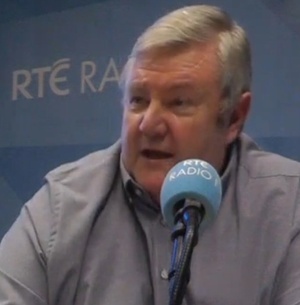
From top: Gardai in Dublin city centre yesterday: John O’Keefe, editor of The Garda Review and former spokesman of the Garda Representatives Association (GRA), speaking to RTÉ’s Paul Reynolds about fake Garda breath test figures in 2017

This morning.

On RTÉ Radio One, criminologist and editor of the Garda Review John O’Keeffe joined host Brendan O’Connor and other panelists to discuss the latest movement restrictions announced by Taoiseach Leo Varadkar last Friday evening.

The other panelists were associate professor of economics at University of Limerick  Stephen Kinsella; former Fine Gael TD and pharmacist Kate O’Connell; emergency and disaster medicine specialist Dr Mick Molloy; Europe Correspondent at Euronews Shona Murray; and sociologist Niamh Hourigan.

During the discussion, Mr O’Keeffe called for humans rights to be “parked”, an idea to which Stephen Kinsella, who also writes for The Currency, objected.

Mr O’Keeffe went on to repeat his call for human rights to be parked and added that they should become “an adjunct issue until such time as we save our population”.

From the discussion:

Brendan O’Connor: “So obviously law and order is on our minds. Last week, 319 recruits effectively graduated early out of Templemore. Lot of those guards now on the streets and a lot of other guards on the street. And also I think in a sense that cohesion holding so far, people kind of worried a little bit about what all this means for crime. So John, I suppose, some people think this is going to lead to some kind of breakdown in law and order and that there’ll be a crime wave. Other people kind of thinking there’s no going to be no crime now because we’re all at home. What’s your thinking?”

John O’Keeffe: “Yeah, they’re probably both right. I mean, typically, crime, it drops during things such as pandemics. For example, 95 per cent of all public order offences are driven by alcohol and/or drugs. And assuming Brendan that nobody has got a mental health illness, there’s nobody going to be charging up O’Connell Street tonight after drinking six cans of Lilt, trying to have a fight with a member of An Garda Síochána.

“So it’s just not going to happen. If no clubs, pubs or restaurants are open, those pressure points fade. Many other offences, of course, are also driven by alcohol and drugs such as violence, violence sexual and indeed theft offences.

“And of course, as regards self defence as well, nothing is open any more. It’s difficult to rob from a shop when it isn’t open. Of course it is possible but all those ordinary, decent offences, if we can call them that, will certainly, I think, probably lessen.

“I mean there is a Dunkirk spirit I think, when it comes to flattening crime levels. In criminology, Niamh will know all about this, is a theory called strain theory which suggests that certain of us commit crime simply because of the strain that society puts on us. You know, we can’t earn the big money, we can’t have the cars, we can’t have the holidays and then we’re pushed out into crime. But strain theory arguably doesn’t work as well during times like we have at the moment where the subcultures…”

O’Connor: “We are all equal?”

O’Keeffe: “Well, exactly my point, that the subcultures of the normative class we’ll call them, with big inverted commas, and the subculture of the criminal classes. The lines are now more blurred and, in fact, we’re all, in one sense, moving together. I mean I do mean this in the most generic sense and we’ve all got the same goal. And the same goal is one word which is survival.

“I mean it’s very simple and although people think that criminals have this notion that, ‘well it doesn’t matter what I do’, they’re fatalistic and there is good research to suggest that, actually, when you think about it, all everybody wants to do is to be alive. Like you can cut it any way you want but that’s what we all want. So that’s common amongst us all now.”

O’Connor: “Ok, now there is drinking going on in the home and we do know that drinking in the home can lead to domestic situations. Are we seeing any kind of rise in complaints about that?”

O’Keeffe: “Yes. France and Australia, they both reported a spike in domestic violence during the Covid-19 outbreak. And there’s been an increase, I have this from a senior source in An Garda Síochána, there’s been an increase already. Now this has been since the 14th of March, right? So we’re talking about the last two weeks, to yesterday, for the exact same period last year where, obviously, there was no lockdown.

“I’ve been advised that there has been a ten per cent increase in what are called domestic incidents that are notified to gardai where no offence was disclosed. So, in other words, call outs. They’ve gone up ten per cent. Remind ourselves of course that it wasn’t until Friday night that [Taoiseach] Leo Varadkar gave us, put us almost into virtual, full lockdown. So it wouldn’t be unusual to assume that, in the next two weeks, we may see that figure rising also.”

O’Connor: “In terms of the policing system, the criminal justice system. Obviously, there’s a lot of stuff already in train. The courts, I think, finished out cases that were happening and then, kind of, have now effectively shut as the cases finish. What’s the situation there?”

O’Keeffe: “Yeah, to an extent. The courts service, they’ve, as you say, a range of measures including relaxing bail requirements and increasing use of video link, you know, to improve social distancing rules. Cloverhill District Court have increased the volume of video links to Cloverhill Prison.

“Solicitors are also being notified which they weren’t necessarily before about trial dates, via email, and each case is going to be dealt with separately. So they are…”

O’Connor: “So trials will still continue?”

O’Keeffe: “They will still continue but slowly. And one of the things that will arguably will suffer is sentencing. I have it on fairly good authority that some 250 prisoners from Mountjoy Prison, from the male wing, have been released early.

“And police in north inner city Dublin are telling me this is already starting to cause some chaos. Now this is anecdotal but 250 is a…”

O’Connor: “Is there a health warning on that, yeah?”

O’Keeffe: “Absolutely but nonetheless, it’s, we know there are a lot of prisoners going to be released. And by the way they were put in…”

O’Connor: “The prison system is a worry here in terms of Covid-19…”

O’Keeffe: “It is a worry…from a criminal justice angle, these people were put in prison for a reason. So just letting them out, we can’t all just suddenly say ‘well, it’s OK, there’s a pandemic. In one sense, you can of course because you must prevent a spread in prison but, on the other hand, the same criminal justice outcomes will potentially arise. So I think that’s a real issue.

“The criminal justice system is going to slow up. I think one of the big issues here is, if I can just mention this point about this idea, we’re hearing a little bit now on social media about human rights. We need to just park human rights for the moment and we need to…”

Stephen Kinsella: “Hang on a second…”

O’Keeffe: “…talk about human lives…”

Kinsella: “Hang on a second…”

O’Keeffe: “…this is all about, nothing else…”

Kinsella: “Park human rights?”

O’Connor: “Hang on, hang on, Stephen Kinsella…”

Kinsella: “Hang on a second, park human rights? Did you really just say that?”

O’Connor: “Ehm…”

Kinsella: “Did that commentator really just say park human rights?”

O’Connor: “….we need to park human rights?”

Kinsella: “Defend that statement please, sir, now.”

O’Keeffe: “I’m quite. No. I’m quite happy to repeat it…”

Kinsella: “Defend it…”

O’Keeffe: “…well I will. When people’s lives are at risk, as they clearly are at the moment, human rights in the way we have been discussing them in Ireland over the last few years have to become an adjunct issue until such time as we save our population.”

O’Connor: “Stephen Kinsella?”

Kinsella: “An adjunct issue? Really? Like you really think that…”

O’Keeffe: “That human lives trump human rights? Yes I absolutely do.”

Kinsella: “That’s, no, no, I think you’re fundamentally, you’re, the first part of your discussion was, you know, ‘these people’, you know, who are allegedly being released. And then you’re saying that we need to park human rights. Do you not think that in this society, in a republic, that’s not an acceptable statement to make.”

O’Keeffe: “It is in the context of what’s going on at the moment. Nobody is saying we should forget human rights at any period, least of all now…”

Kinsella: “Well, you are… that’s what…”

O’Keeffe: “…it takes priority…Human lives take priority so if there are police checks all over Dublin, and by the way, I was stopped three times coming here today. Some other people would say my human rights were infringed, well you know what? I didn’t mind it at all because I know what the end result is meant to be, that’s what I’m talking about. What I don’t want are people getting carried away with what they believe to be human rights issues which, quite frankly, are subservient to human lives…that’s my point.”

O’Connor: “Issues such as what, John?”

O’Keeffe: “Such as what happened to me today, for example. I was stopped, I was asked questions, I wasn’t asked for documents, I told them who I was, I told them where I was going and that was fine. But there are some people who would find that offensive. What I’m saying is I don’t find it offensive and I think none of us should in the next while, until we get over this pandemic.”

O’Connor: “Stephen.”

Kinsella: “If you’re in a situation where somebody chooses to deprive you of your liberty and they do that based on a suspicion, and that suspicion turns out not to be true, and you have no recourse, is that in your conception of things, ok? Because there’s a pandemic?”

O’Connor: “But Stephen, are we not slightly all giving up some of our rights at the…”

Kinsella: “I have no issue, I have no issue with being asked what my movements are, at this particular point in time. My reaction was in hearing a statement that you have to simply suspend human rights. I just think that that statement is far too far. And I don’t think the other speaker has defended that position in any way actually.”

Meanwhile…

Listen back in full here

Previously: ‘They Falsified Them Under Pressure From Gardaí’

Broadsheet.ie